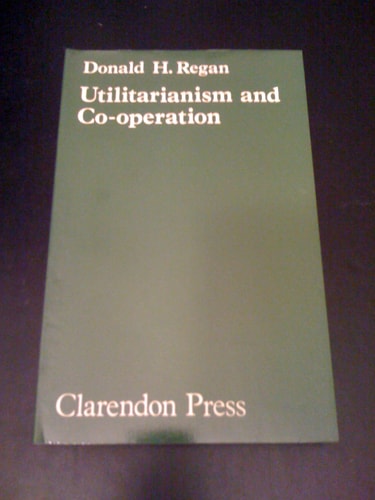
Utilitarianism and Cooperation
0
0
As an Amazon Associate and affiliate partner, Menrva Books earns from qualifying purchases. Learn more
Author Description
The author identifies and defines the features of traditional utilitarian theories which account for their appeal, demonstrates that no theory which is "exclusively act-oriented" can have all the properties that ultilitarians have attempted to build into their theories, and develops a new theory "co-operative utilitarianism", which is radically different than traditional theories.
Menrva's Summary
THE THESIS
This work investigates whether traditional utilitarian frameworks can reconcile individual act-oriented morality with the requirements of effective social cooperation. Donald H. Regan, a scholar in legal and moral philosophy, evaluates the logical constraints of classical utilitarianism to identify inherent contradictions in exclusively act-oriented models. He proposes a novel framework titled 'co-operative utilitarianism' to resolve these tensions, arguing that a shift in how agents coordinate their actions is necessary for a coherent moral theory.
THE SCOPE MAP
What You Will Find
- A critical analysis of traditional act-oriented utilitarian theories and their logical limitations.
- The formal development of 'co-operative utilitarianism' as an alternative moral framework.
- A rigorous examination of the relationship between individual agency and collective outcomes.
- Theoretical arguments regarding the necessity of cooperation in maximizing utility.
THE AUTHORITY PERSPECTIVE
Experts recognize this text as a significant contribution to contemporary moral philosophy and the study of consequentialist ethics. Readers frequently note the high level of technical rigor and the density of the arguments presented throughout the chapters.
Page Count:
296
Publication Date:
1980-10-23
Publisher:
Oxford University Press
ISBN-10:
0198246366
ISBN-13:
9780198246367
Philosophy
Cooperation
Social Theory
Political Philosophy
Ethics
Utilitarianism
Community Tags
Similar Books