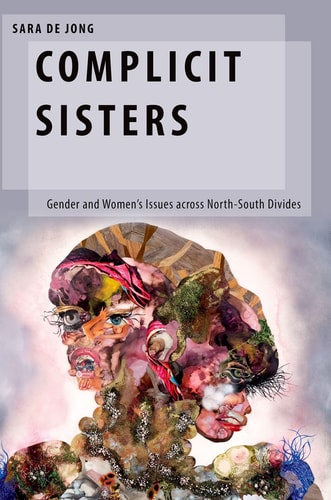
Complicit Sisters: Gender and Women's Issues across North-South Divides
0
0
As an Amazon Associate and affiliate partner, Menrva Books earns from qualifying purchases. Learn more
Author Description
NGOs headquartered in the North have been, for some time, prominent actors in attempts to address the poverty, lack of political representation, and labor exploitation that disproportionally affect women from the global South. Feminist NGOs and NGOs focusing on women's rights have been successful in attracting attention to their causes, but critics argue that the highly educated elites from the global North and South who run them fail to effectively question the power hierarchies in which they operate. In order to give depth to these criticisms, Sara de Jong interviewed women NGO workers in seven different European countries about their experiences and perspectives on working on gendered issues affecting women in the global South as well as migrant women in the global North.Complicit Sisters untangles and analyzes the complex tensions women NGO workers face and explores the ways in which they negotiate potential complicities in their work. Unlike other studies looking at development workers "on the ground," this book examines the women NGO workers in the global North who work to influence high level gender advocacy and policy, alongside women NGO workers supporting migrant women within the global North--a unique combination. Weighing the women's first-hand accounts against critiques arising from feminist theory, postcolonial theory, global civil society theory and critical development literature, de Jong brings to life the dilemmas of "doing good."
Menrva's Summary
THE THESIS
This book investigates the extent to which women working in Northern-based NGOs inadvertently perpetuate existing power hierarchies while attempting to address gender-based inequalities in the global South and among migrant populations in the North. Sara de Jong, a scholar in international relations and gender studies, utilizes qualitative interview data from NGO workers across seven European countries to examine the tensions between advocacy goals and institutional complicity. By synthesizing first-hand accounts with postcolonial and feminist theory, the author provides a framework for understanding the ethical dilemmas inherent in contemporary humanitarian and development work.
THE SCOPE MAP
What You Will Find
- Qualitative interview data from women NGO workers in seven European countries.
- Analysis of the intersection between gender advocacy and global power structures.
- Theoretical synthesis of postcolonial, feminist, and global civil society literature.
- Examination of both international development work and domestic support for migrant women.
Scope Limits
- The study focuses primarily on the perspectives of NGO workers based in the global North rather than the recipients of aid on the ground.
- It does not provide a comprehensive history of all NGO movements but focuses specifically on gender-focused advocacy.
THE AUTHORITY PERSPECTIVE
Scholars and practitioners in the field of international development frequently cite this work for its nuanced examination of the internal contradictions faced by advocacy organizations. Readers often note the academic density of the prose, which makes it a valuable resource for students and researchers interested in the critical analysis of global civil society.
Page Count:
240
Publication Date:
2019-04-01
Publisher:
Oxford University Press
ISBN-10:
019005588X
ISBN-13:
9780190055882
Politics
Women
World politics
Politics & Government
New Used & Rental Textbooks
International relations
Gender Studies
Political
Sociology
Non-governmental organizations
Community Tags
Similar Books