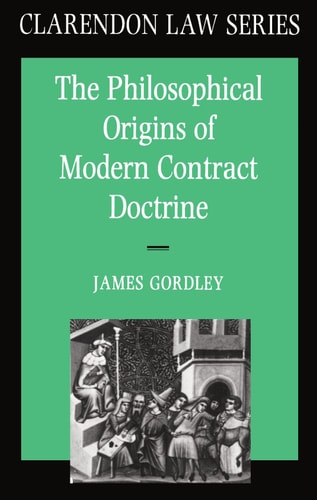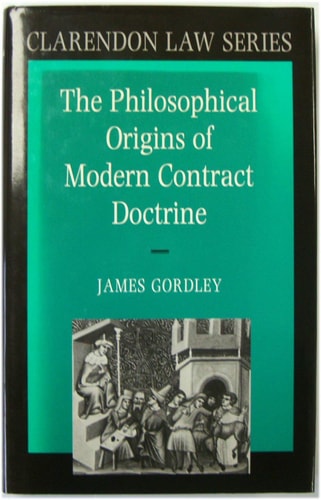
The Philosophical Origins of Modern Contract Doctrine
0
0
As an Amazon Associate and affiliate partner, Menrva Books earns from qualifying purchases. Learn more
Author Description
The common law of England and the United States and the civil law of continental Europe have a similar doctrinal structure, a structure not found in the English cases or Roman legal texts from which they supposedly descend. In this original and unorthodox study of common law and legal philosophy the author throws light on the historical origins of this confusion and in doing so attempts to find answers to many of the philosophical puzzles which contract lawyers face today. Re-assessing the impact of modern philosophy upon contract law, the author concludes that modern philosophy having failed to provide a new basis for a coherent doctrinal system in the law of contract, the only hope for devising such a coherent system lies in re-discovering the neglected philosophy of Aristotle and Aquinas.
Menrva's Summary
THE THESIS
This book investigates the historical and philosophical origins of modern contract doctrine to determine why common and civil law systems share a structure not found in their foundational legal texts. James Gordley, a scholar of comparative law and legal history, utilizes a comparative analysis of English common law, continental civil law, and classical philosophy. He argues that modern philosophical attempts to ground contract law have failed, suggesting that a return to Aristotelian and Thomistic principles offers the most viable path toward a coherent legal framework.
THE SCOPE MAP
What You Will Find
- Comparative analysis of English common law and continental civil law structures
- Historical examination of Roman legal texts and their evolution
- Critical assessment of modern philosophical influences on contract theory
- Re-evaluation of Aristotelian and Thomistic ethics as a basis for legal doctrine
THE AUTHORITY PERSPECTIVE
Legal scholars and historians frequently cite this work as a foundational text for understanding the intersection of classical philosophy and modern contract law. Readers often note the academic density of the prose, which requires a strong background in legal theory to fully appreciate the author's arguments.
Page Count:
272
Publication Date:
1991-08-15
Publisher:
Oxford University Press
ISBN-10:
0198256647
ISBN-13:
9780198256649
Philosophy
Legal History
Professional Career & Trade
Academic
Contract law
Contracts
Law