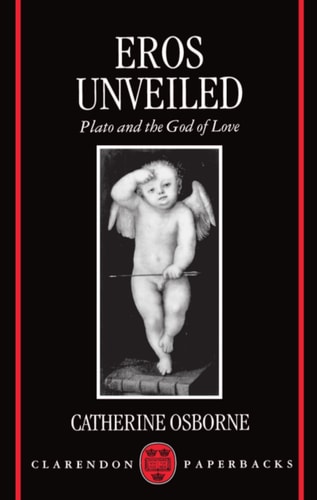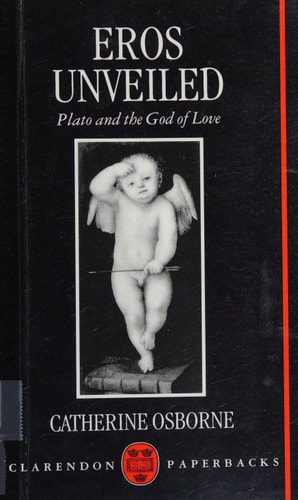
Eros Unveiled: Plato and the God of Love
0
0
As an Amazon Associate and affiliate partner, Menrva Books earns from qualifying purchases. Learn more
Author Description
This unique book challenges the traditional distinction between eros, the love found in Greek thought, and agape, the love characteristic of Christianity. Focusing on a number of classic texts, including Plato's Symposium and Lysis, Aristotle's Ethics and Metaphysics, and famous passages in Gregory of Nyssa, Origen, Dionysius the Areopagite, Plotinus, Augustine, and Thomas Aquinas, the author shows that Plato's account of eros is not founded on self-interest. In this way, she restores the place of erotic love as a Christian motif, and unravels some longstanding confusions in philosophical discussions of love.
Menrva's Summary
THE THESIS
This book investigates the historical and philosophical validity of the traditional dichotomy between eros and agape in Western thought. Catherine Osborne, a scholar of ancient philosophy and patristics, examines the evolution of these concepts through a rigorous analysis of foundational texts. She argues that the common perception of Platonic eros as purely self-interested is a misreading, proposing instead that it serves as a vital, overlooked motif within Christian theological frameworks.
THE SCOPE MAP
What You Will Find
- Comparative analysis of Platonic and Aristotelian texts alongside Christian patristic writings.
- A re-evaluation of the Symposium and Lysis in the context of later theological development.
- Examination of key figures including Gregory of Nyssa, Origen, Dionysius the Areopagite, Plotinus, Augustine, and Thomas Aquinas.
- A methodological critique of how modern philosophical discourse has historically categorized different forms of love.
THE AUTHORITY PERSPECTIVE
Scholars recognize this work as a significant contribution to the intersection of classical philosophy and Christian theology. Readers frequently note the academic density of the prose, which requires a foundational understanding of the primary texts discussed.
Page Count:
264
Publication Date:
1995-02-02
Publisher:
Oxford University Press
ISBN-10:
0198267614
ISBN-13:
9780198267614
Philosophy
Ethics
Theology
History of Ideas