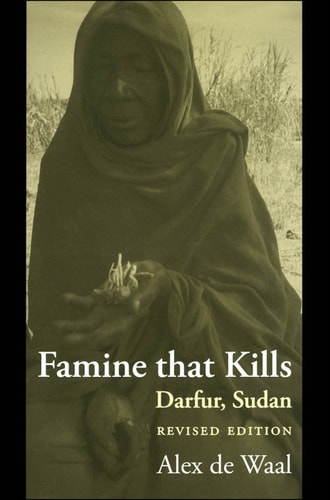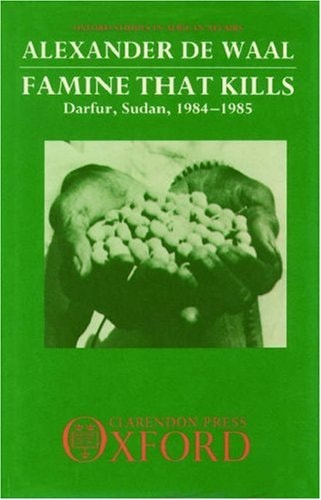
Famine That Kills: Darfur, Sudan, 1984-1985
0
0
As an Amazon Associate and affiliate partner, Menrva Books earns from qualifying purchases. Learn more
Author Description
In 2004, Darfur, Sudan was described as the "world's greatest humanitarian crisis." Twenty years previously, Darfur was also the site of a disastrous famine. Famine that Kills is a seminal account of that famine, and a social history of the region. In a new preface prepared for this revised edition, Alex de Waal analyzes the roots of the current conflict in land disputes, social disruption and impoverishment. Despite vast changes in the nature of famines and in the capacity of response, de Waal's original challenge to humanitarian theory and practice including a focus on the survival strategies of rural people has never been more relevant. Documenting the resilience of the people who suffered, it explains why many fewer died than had been predicted by outsiders. It is also a pathbreaking study of the causes of famine deaths, showing how outbreaks of infectious disease killed more people than starvation. Now a classic in the field, Famine that Kills provides critical background and lessons of past intervention for a region that finds itself in another moment of humanitarian tragedy.
Menrva's Summary
THE THESIS
This work investigates the underlying social and political mechanisms that transform environmental stress into mass mortality during famine events. Alexander de Waal, a researcher with extensive experience in African humanitarian crises, utilizes field data from the 1984-1985 Darfur famine to challenge conventional relief models. He argues that famine deaths are primarily driven by infectious disease outbreaks rather than simple starvation, and that rural populations possess complex, often overlooked survival strategies that dictate their resilience.
THE SCOPE MAP
What You Will Find
- Analysis of the 1984-1985 famine in Darfur, Sudan.
- Evaluation of humanitarian intervention strategies and their historical efficacy.
- Examination of the role of infectious disease in famine-related mortality.
- Documentation of indigenous survival strategies and social resilience in rural communities.
THE AUTHORITY PERSPECTIVE
Experts recognize this text as a foundational study in humanitarian theory that shifted the focus from caloric intake to public health and social agency. Readers frequently note the academic density of the prose and its enduring relevance for understanding contemporary conflicts in the region.
Page Count:
272
Publication Date:
1989-12-07
Publisher:
Oxford University Press
ISBN-10:
0198273495
ISBN-13:
9780198273493
History
Food Relief
Famines
Sociology