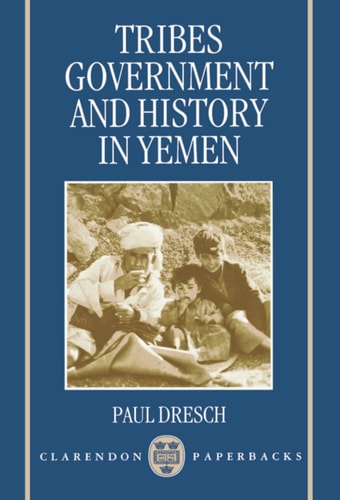
Tribes, Government, and History in Yemen
0
0
As an Amazon Associate and affiliate partner, Menrva Books earns from qualifying purchases. Learn more
Author Description
Paul Dresch here combines ethnography with history to describe the system of sedentary tribes in South Arabia--a strategically sensitive part of the world--over the past thousand years. He examines the values and traditions the tribal people bring to the contemporary world of nation-states, and discusses the relation of the major tribes to pre-modern Islamic learning, the Zaydi Imamate, ideas of contemporary statehood, and the area as a whole. Dresch's unique and provocative insights are of increasing value given the increased Western involvement with Yemen since 1989, the union of the two Yemens in 1990, and the country's first free election in 1993.
Menrva's Summary
THE THESIS
This work investigates how the historical traditions and social structures of sedentary tribes in South Arabia interact with the modern framework of the nation-state. Paul Dresch, an expert in Yemeni ethnography, synthesizes a millennium of historical data with contemporary political analysis to explain the resilience of tribal systems. He argues that tribal values are not relics of the past but active, evolving components that shape the governance and identity of modern Yemen.
THE SCOPE MAP
What You Will Find
- A historical analysis of the Zaydi Imamate and its influence on tribal relations.
- An ethnographic study of sedentary tribal systems in South Arabia over the last thousand years.
- An examination of the intersection between traditional tribal customs and modern statehood.
- Contextual analysis of Yemen's political evolution, including the 1990 union and the 1993 elections.
THE AUTHORITY PERSPECTIVE
Scholars and regional analysts frequently cite this text as a foundational resource for understanding the complex interplay between tribalism and state authority in the Arabian Peninsula. Readers often note the academic rigor and the depth of the author's ethnographic research, which remains highly relevant for those studying the political landscape of the region.
Page Count:
480
Publication Date:
1994-01-27
Publisher:
Clarendon Press
ISBN-10:
0198277903
ISBN-13:
9780198277903
History
Ethnography
Yemen
Anthropology