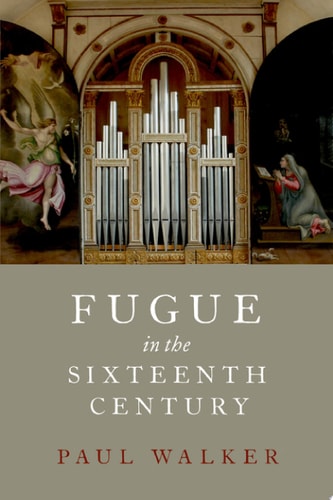
Fugue in the Sixteenth Century
0
0
As an Amazon Associate and affiliate partner, Menrva Books earns from qualifying purchases. Learn more
Author Description
Examining the roots of the classical fugue and the early history of non-canonic fugal writing, Paul Walker's Fugue in the Sixteenth Century explores the three principal fugal genres of the period: motet, ricercar, and canonza. The volume treats each genre in turn, tracing the fugue's development throughout the century and highlighting important moments and trends along the way. Taking a two-tiered approach, Walker, on one level, examines fugue from the perspective of contemporary musicians, and on another level, takes into account fugue's later history and the elements that came to play a significant role in its formation.Walker is the first scholar to successfully tie together the various strands of the "pre-Bach fugue" thanks to the growing availability of editions of the repertories involved. He also takes account of recent work elucidating the change in compositional approach around 1500 from a basis in cantus firmus and canon to one favoring non-canonical, fugal imitation. Featuring well-chosen musical examples to illustrate the compositional developments of the sixteenth century, Fugue in the Sixteenth Century is a definitive study for both specialist musicologists and organists and harpsichordists alike.
Menrva's Summary
THE THESIS
This volume investigates the origins and evolution of the fugue during the sixteenth century, specifically addressing how non-canonic fugal writing emerged as a dominant compositional practice. Paul Walker, a recognized scholar in the field, utilizes a dual-perspective framework that contrasts the understanding of contemporary sixteenth-century musicians with the retrospective analysis of later musicological developments. By synthesizing recent research on the shift from cantus firmus techniques to imitative structures, the author provides a comprehensive account of the pre-Bach fugal landscape.
THE SCOPE MAP
What You Will Find
- Analysis of three primary fugal genres: motet, ricercar, and canzona.
- Examination of the transition in compositional methodology around 1500.
- Integration of musical examples to demonstrate technical developments.
- Contextualization of the fugue within the broader Renaissance musical repertory.
Scope Limits
- The text focuses primarily on the sixteenth century and does not provide an exhaustive history of the fugue in the Baroque era or beyond.
- It assumes a baseline knowledge of music theory and terminology.
THE AUTHORITY PERSPECTIVE
Musicologists and performers frequently cite this work as a foundational text for understanding the pre-Bach development of fugal imitation. Experts highlight the clarity with which Walker synthesizes complex repertories and compositional shifts, making it a standard reference for those studying Renaissance keyboard and vocal music.
Page Count:
384
Publication Date:
2020-11-16
Publisher:
Oxford University Press
ISBN-10:
0190056193
ISBN-13:
9780190056193
Music History
New Used & Rental Textbooks
Musicology
Music
Criticism history
Performance theory
Musical Genres
Music theory
Community Tags
Other Editions(2)

Similar Books