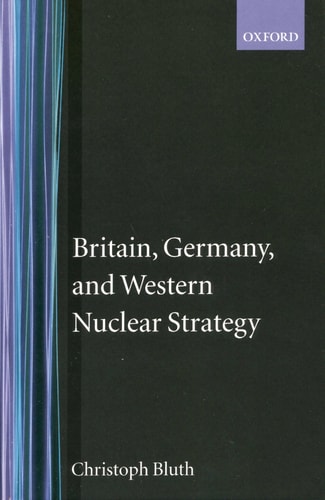
Britain, Germany and Western Nuclear Strategy
0
0
As an Amazon Associate and affiliate partner, Menrva Books earns from qualifying purchases. Learn more
Author Description
This comprehensive account of post-war British and German policies towards nuclear weapons shows how these interacted in the context of alliance strategy. The author gives a detailed account of major episodes in the evolution of the alliance and its doctrine, such as the MLF debate, the origins of flexible response, and theatre modernization programmes, and demonstrates how British and German interests impinged upon these episodes. In all this, one of the lesser-known nuclear relationships within the alliance comes vividly into focus.
Menrva's Summary
THE THESIS
This book investigates how the post-war nuclear policies of Britain and Germany shaped and were shaped by the broader strategic doctrine of the Western alliance. Christoph Bluth, an expert in international security, utilizes historical records and diplomatic analysis to examine the complex interplay between national interests and collective defense. The work argues that the bilateral relationship between these two nations was a critical, yet often overlooked, component in the evolution of NATO's nuclear posture during the Cold War.
THE SCOPE MAP
What You Will Find
- Analysis of major alliance episodes including the Multilateral Force (MLF) debate and the origins of flexible response.
- Examination of theatre modernization programs and their impact on European security.
- Evaluation of the divergence and convergence of British and German nuclear interests.
- Historical documentation of post-war defense policy and alliance strategy.
THE AUTHORITY PERSPECTIVE
Experts recognize this work as a foundational text for understanding the specific bilateral dynamics within the NATO nuclear framework. Scholars frequently cite the book for its detailed archival research and its ability to clarify the often-obscured influence of British and German policy on global nuclear strategy.
Page Count:
336
Publication Date:
1995-08-24
Publisher:
Oxford University Press
ISBN-10:
0198280041
ISBN-13:
9780198280040
History
Military History
Nuclear Strategy
Great Britain
International relations
Nuclear weapons
Community Tags
Similar Books