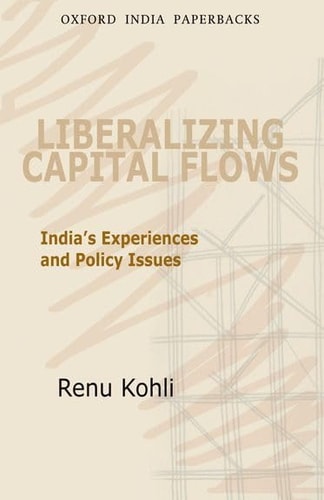
Financial Openness and National Autonomy: Opportunities and Constraints
0
0
As an Amazon Associate and affiliate partner, Menrva Books earns from qualifying purchases. Learn more
Author Description
The previous decade ushered in a globalization of finance and governments abandoned their "Keynesian" responsibility to engage in international financial management. A new doctrine of global neoclassicism arose, based on the premise that regulation of financial markets was futile. This volume rejects that approach, and asks whether national policy autonomy is still possible. The authors address financial openness from a "political economy" perspective, including both general historical and theoretical approaches, as well as case studies of countries such as Australia, Mexico, and Pakistan.
Menrva's Summary
THE THESIS
This volume investigates whether national policy autonomy remains viable in an era characterized by the rapid globalization of financial markets. The authors, Juliet B. Schor and Tariq Banuri, challenge the prevailing doctrine of global neoclassicism which posits that financial regulation is ineffective. By utilizing a political economy framework, the text evaluates the historical and theoretical implications of financial openness while questioning the abandonment of international financial management responsibilities by modern governments.
THE SCOPE MAP
What You Will Find
- Theoretical analysis of global neoclassicism versus alternative regulatory frameworks
- Historical overview of the shift in international financial management policies
- Comparative case studies of national economies including Australia, Mexico, and Pakistan
- Political economy assessment of constraints on national policy autonomy
THE AUTHORITY PERSPECTIVE
Experts recognize this work as a critical contribution to the discourse on the limitations of neoliberal financial policies in developing and developed nations. Readers frequently note the academic density of the prose, which serves as a foundational text for students and researchers interested in the intersection of global finance and state sovereignty.
Page Count:
304
Publication Date:
1992-05-14
Publisher:
Clarendon Press
ISBN-10:
0198283644
ISBN-13:
9780198283645
Economics
Globalization
Finance
Community Tags
Similar Books