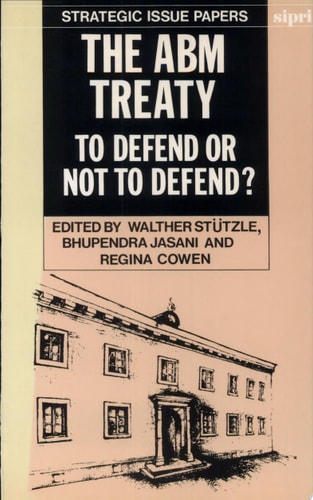
The ABM Treaty: To Defend or Not to Defend?
0
0
As an Amazon Associate and affiliate partner, Menrva Books earns from qualifying purchases. Learn more
Author Description
Among the measures employed to stabilize the strategic relationship between the East and West in the nuclear age, the 1972 Anti-Ballistic Missile (ABM) Treaty is of profound importance. This cooperative agreement to limit offensive and defensive strategic forces has recently been challenged by the allure of new technology, including the proposed Space-based Defense System. Coinciding with the third ABM Treaty Review Conference, this study by an international roster of renowned scholars and policymakers--including two negotiators of the 1972 Treaty--provides insight into the complexities of the issues involved and identifies possible solutions. Concise, timely, and well-balanced, this collection is an important contribution to the debates surrounding the future of international peace and security.
Menrva's Summary
THE THESIS
This report investigates the viability and strategic implications of the 1972 Anti-Ballistic Missile (ABM) Treaty in the face of emerging defensive technologies. The authors, a group of international scholars and former treaty negotiators, utilize historical analysis and technical assessments to evaluate how new developments, such as space-based defense systems, threaten the established framework of strategic stability between global powers. The text argues that the treaty remains a critical instrument for international security, requiring careful adaptation rather than abandonment.
THE SCOPE MAP
What You Will Find
- Historical analysis of the 1972 ABM Treaty negotiations and implementation.
- Technical evaluation of space-based defense systems and their impact on strategic deterrence.
- Primary source perspectives from original treaty negotiators.
- Policy recommendations for maintaining international peace and security during the third ABM Treaty Review Conference.
THE AUTHORITY PERSPECTIVE
Experts identify this report as a foundational text for understanding the intersection of Cold War diplomacy and missile defense technology. Readers frequently note the academic density of the prose, which provides a rigorous examination of the treaty's role in maintaining global stability.
Page Count:
232
Publication Date:
1987-12-10
Publisher:
Stockholm International Peace Research Institute
ISBN-10:
0198291191
ISBN-13:
9780198291190
History
Arms Control
Military Strategy
Nuclear weapons
Treaties
International relations
Community Tags
Similar Books