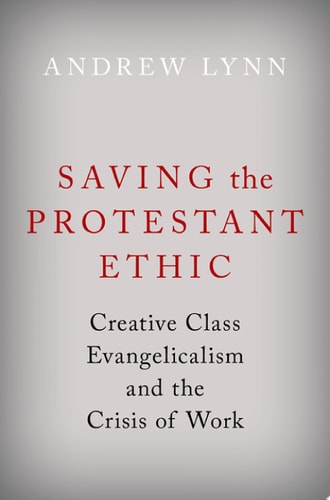
Saving the Protestant Ethic: Creative Class Evangelicalism and the Crisis of Work
0
0
As an Amazon Associate and affiliate partner, Menrva Books earns from qualifying purchases. Learn more
Author Description
Protestant orientations to work and economics have shaped wider American culture for several centuries. But not all strands of American Protestantism have elevated secular work to the highest echelons of spiritual significance. This book surveys the efforts of a religious movement within white Protestant fundamentalism and its neo-evangelical successors to "make work matter to God."Today, bearing the name the "faith and work movement," this effort puts on display the creative capacities of religious and lay leaders to adapt a faith system to the changing social-economic conditions of advanced capitalism. Building from the insights and theory of Max Weber, Andrew Lynn draws on archival research and interviews with movement leaders to survey and assess the surging number of new organizations, books, conferences, worship songs, seminary classes, vocational programming, and study groups promoting classically Protestant and Calvinist ideas of work and vocation. He traces these efforts back to early-twentieth-century business leaders and theologically trained leaders who saw a desperate need to foster a new "work ethic" among religious laity entering into professional, managerial, and creative class work.Leaders interviewed for the study recount the challenges of rerouting energies that were previously steered toward inward spirituality, cultural separatism, and proselytization. Through these interviews, Saving the Protestant Ethic captures ongoing in-group tensions and creative adaptation among American evangelicals as they navigate changing class and political dynamics that shape American society.
Menrva's Summary
THE THESIS
This book investigates how the modern faith and work movement adapts historical Protestant and Calvinist doctrines to provide spiritual significance to secular professional labor within the context of advanced capitalism. Andrew Lynn, a reverend and researcher, examines the evolution of white Protestant fundamentalism into contemporary neo-evangelicalism. By analyzing the shift from cultural separatism to active engagement in professional and creative class spheres, the author assesses how religious leaders construct a new work ethic to align faith with modern economic realities.
THE SCOPE MAP
What You Will Find
- Historical analysis of early-twentieth-century business and theological leadership
- Examination of the faith and work movement's organizational infrastructure, including conferences, curricula, and media
- Application of Max Weber’s sociological theories to contemporary evangelical practices
- Qualitative data derived from interviews with movement leaders and archival research
Scope Limits
- The study focuses primarily on white Protestant fundamentalist and neo-evangelical traditions
- It does not provide an exhaustive survey of non-Protestant or non-evangelical approaches to labor and vocation
THE AUTHORITY PERSPECTIVE
Scholars and readers note that the text provides a rigorous sociological examination of how religious movements navigate shifting class dynamics. Experts highlight this as a significant contribution to understanding the intersection of American evangelicalism and modern economic structures.
Page Count:
360
Publication Date:
2023-04-07
Publisher:
Oxford University Press
ISBN-10:
0190066687
ISBN-13:
9780190066680
Economics
Politics
Religion
Sociology
Social Sciences - Religion - Christianity
Work Ethic
Theology
Ethics
Sociology of Religion
Evangelicalism
Protestantism
New Used & Rental Textbooks
Community Tags
Similar Books