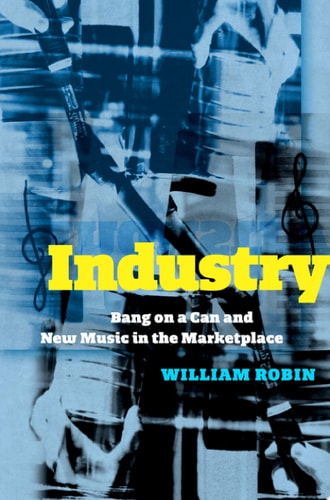
Industry: Bang on a Can and New Music in the Marketplace
0
0
As an Amazon Associate and affiliate partner, Menrva Books earns from qualifying purchases. Learn more
Author Description
Amidst the heated fray of the Culture Wars emerged a scrappy festival in downtown New York City called Bang on a Can. Presenting eclectic, irreverent marathons of experimental music in crumbling venues on the Lower East Side, Bang on a Can sold out concerts for a genre that had been long considered box office poison. Through the 1980s and 1990s, three young, visionary composers--David Lang, Michael Gordon, and Julia Wolfe--nurtured Bang on a Can into a multifaceted organization with a major record deal, a virtuosic in-house ensemble, and a seat at the table at Lincoln Center, and in the process changed the landscape of avant-garde music in the United States.Bang on a Can captured a new public for new music. But they did not do so alone. As the twentieth century came to a close, the world of American composition pivoted away from the insular academy and towards the broader marketplace. In the wake of the unexpected popularity of Steve Reich and Philip Glass, classical presenters looked to contemporary music for relevance and record labels scrambled to reap its potential profits, all while government funding was imperilled by the evangelical right. Other institutions faltered amidst the vagaries of late capitalism, but the renegade Bang on a Can survived--and thrived--in a tumultuous and idealistic moment that made new music what it is today.
Menrva's Summary
THE THESIS
This book investigates how the organization Bang on a Can successfully navigated the transition of American avant-garde music from insular academic circles into the broader commercial marketplace. William Robin, a musicologist, utilizes archival research and institutional history to analyze how composers David Lang, Michael Gordon, and Julia Wolfe adapted to the shifting economic and political landscape of the late 20th century. The text argues that their ability to reconcile experimental aesthetics with market demands allowed them to thrive while other institutions struggled during the Culture Wars.
THE SCOPE MAP
What You Will Find
- The history of the Bang on a Can festival from the 1980s through the 1990s.
- Analysis of the shift in American composition away from academia toward commercial viability.
- Examination of the impact of late capitalism and government funding cuts on experimental arts.
Scope Limits
- The text does not provide a comprehensive biography of every individual composer involved in the movement.
- It does not focus on the technical music theory behind the compositions themselves.
THE AUTHORITY PERSPECTIVE
Experts recognize this work as a significant contribution to the study of contemporary music institutions and their survival strategies. Readers frequently note the balance between detailed historical narrative and broader cultural analysis, making it a standard reference for those interested in the intersection of art and commerce.
Page Count:
320
Publication Date:
2021-02-01
Publisher:
Oxford University Press
ISBN-10:
0190068655
ISBN-13:
9780190068653
Biography
Performance theory
Music
Music Industry
Criticism history
Musical Genres
history music
Humanities - Music - Classical
American History
Music History
Community Tags
Similar Books