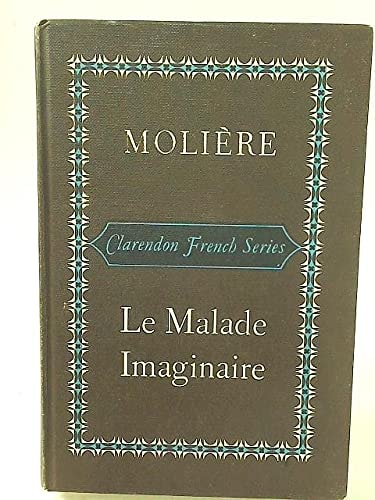
Le Malade Imaginaire
0
0
As an Amazon Associate and affiliate partner, Menrva Books earns from qualifying purchases. Learn more
Author Description
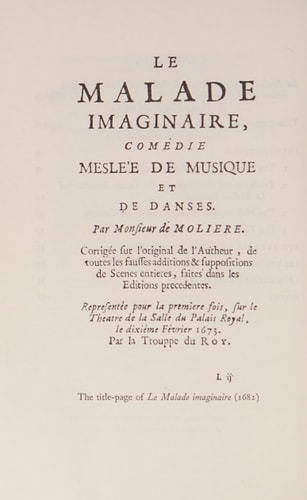
The imaginary invalid or The Hypochondriac is the last comedy and at the same time the last play written by Molière. It is a comedy-ballet in three acts.In Molière’s outrageous satire of medicine and its practitioners, the wealthy Argan, to put it mildly, "enjoys" poor health. Laxatives, suppositories, bloodlettings, and second and third opinions from the leading quacks are the order of his day and hell on his wily, back-talking servant Toinette. His daughter Angélique is in love with the impoverished Cléante, but Argan wants to marry her to Thomas Diafoirus, a medical dunce who can assure his father-in-law a lifetime of health care. Cléante disguises himself as a music teacher to gain access to his love, but Béline, Argan’s mercenary second wife, threatens to expose them. A disguised Toinette, sage advice from his brother Béralde, and a faked death scene finally teach Argan where to place his trust.
Menrva's Summary
THE PULSE
Argan, a wealthy hypochondriac, attempts to control his daughter's future by marrying her to a medical student, triggering a series of deceptions orchestrated by his clever servant. Driven by his obsession with health and his reliance on incompetent physicians, Argan seeks to secure a permanent medical advisor through his daughter Angélique's marriage. His plans are thwarted by the interference of his servant Toinette, his brother Béralde, and the romantic aspirations of Angélique and her suitor Cléante. The narrative unfolds through a series of farcical encounters and disguises, culminating in a theatrical resolution that exposes the greed of those surrounding the protagonist. The play utilizes the structure of a comedy-ballet to balance biting social commentary with physical humor.
INSIDE THE PAGES
- Satirical critique of the 17th-century medical profession
- Use of the comedy-ballet format incorporating music and dance
- Archetypal characters including the wily servant and the pompous physician
- Central conflict revolving around arranged marriage and familial duty
- Frequent use of disguise and mistaken identity as plot devices
- Exploration of greed and mercenary motives within the domestic sphere
- Physical comedy and slapstick elements inherent in the farce genre
- Thematic focus on the tension between genuine care and professional exploitation
THE COLLECTIVE ECHO
Readers and critics frequently highlight the play as a sharp, enduring critique of medical arrogance and human gullibility. Discussion often centers on the character of Toinette, who serves as the moral and intellectual anchor amidst the absurdity of the other characters. The pacing is noted for its rapid, farcical energy that keeps the audience engaged despite the play's age. Scholars often point to the irony of Molière writing this comedy while his own health was failing, adding a layer of poignancy to the satire. The work remains a staple of theatrical study for its mastery of comedic timing and its effective use of social archetypes.
Page Count:
168
Publication Date:
1965-03-01
Publisher:
Oxford University Press
ISBN-10:
0198323573
ISBN-13:
9780198323570
Drama
Satire
Anthologies
Dramas & Plays
French literature
Comedy
classic
Play