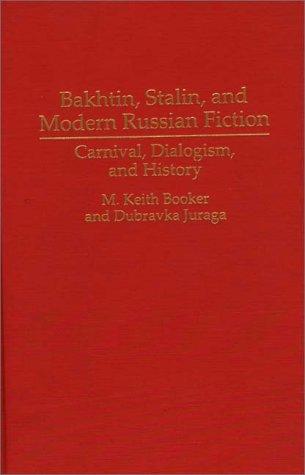
Bakhtin, Stalin, and Modern Russian Fiction
0
0
As an Amazon Associate and affiliate partner, Menrva Books earns from qualifying purchases. Learn more
Author Description
Author description coming soon. We're reaching out to them in the ether...
Menrva's Summary
THE THESIS
This book investigates the complex relationship between the literary theories of Mikhail Bakhtin and the socio-political context of Stalinist Russia, exploring how these theories influenced and were shaped by the era's dominant ideology and literary production. M. Keith Booker, a noted scholar of comparative literature, examines Bakhtin's key concepts such as dialogism, chronotope, and heteroglossia, and analyzes their application and adaptation within the framework of Soviet literary policy. The study delves into how Soviet censorship and the cult of personality surrounding Stalin impacted the reception and development of Bakhtin's ideas, as well as how modern Russian fiction grappled with these constraints. Booker's analysis considers both the theoretical underpinnings and the practical manifestations of these literary and political forces.
THE SCOPE MAP
- Analysis of Mikhail Bakhtin's foundational literary theories (dialogism, chronotope, heteroglossia).
- Examination of the influence of Stalinist ideology and censorship on literary production.
- Exploration of how modern Russian fiction engaged with Bakhtinian concepts under political pressure.
- Case studies of specific authors and works within the Stalinist literary landscape.
- Discussion of the reception and evolution of Bakhtin's ideas in Soviet Russia.
- Comparative analysis of theoretical frameworks and practical literary output.
- The role of the author and the state in shaping literary discourse.
THE AUTHORITY PERSPECTIVE
This work is recognized as a significant contribution to the study of Russian literary theory and history. Scholars have noted its rigorous engagement with Bakhtin's complex ideas and its insightful contextualization within the oppressive political climate of Stalinist Russia. The book is appreciated for its detailed analysis of how theoretical concepts are both constrained and creatively adapted by socio-political realities. It serves as a valuable resource for understanding the intersection of literature, philosophy, and politics in a pivotal period of Soviet history.
Page Count:
181
Publication Date:
1995-01-01
ISBN-10:
0313295263
ISBN-13:
9780313295263
History
Fiction
Non-Fiction
Literary theory
Literary Criticism
Russian
Community Tags
Similar Books