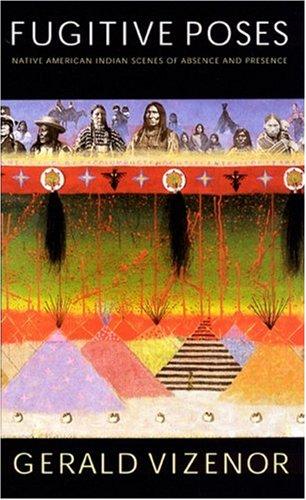
Fugitive Poses
0
0
As an Amazon Associate and affiliate partner, Menrva Books earns from qualifying purchases. Learn more
Author Description
Native peoples today are best known to others, and often to themselves, through their fugitive poses: textual and graphic depictions preserved by scholarship, consumed by the dominant culture, and steeped in a modernist aesthetic of romantic victimry, tragedy, and nostalgia. Because such representations do not easily convey the immediacy and distinctiveness of Native cultures, they effectively celebrate the absence rather than the presence of the Native. The fugitive poses captured in photographs, portraits, translations, official documents, New Age stories, blood-quantum counts, captivity narratives, and museum objects simulate Native peoples rather than reveal them. Native sovereignty, Gerald Vizenor contends, is not possessed but expressed. It emerges not from practicing vengeful and exclusionary policies and politics, or by simple recourse to territoriality, but by turning to Native transmotion, the forces and processes of creativity and imagination lying at the heart of Native world-views and actions. Overturning long-held scholarly and popular assumptions, Vizenor offers a vigorous examination of tragic cultures and victimry.
Menrva's Summary
THE THESIS
The book challenges conventional representations of Native peoples by examining how 'fugitive poses'—textual and graphic depictions—obscure their lived realities and cultural presence. Gerald Vizenor argues that these simulated images, prevalent in photography, official documents, and academic scholarship, often perpetuate a modernist aesthetic of romantic victimhood and nostalgia, thereby celebrating absence over presence. He posits that Native sovereignty is not a static possession but an active expression rooted in Native transmotion, the creative and imaginative forces central to Native worldviews. The work critically analyzes prevailing notions of tragic cultures and victimry, offering a vigorous re-examination of these concepts.
THE SCOPE MAP
- Analysis of 'fugitive poses' in various media, including photographs, portraits, translations, and official documents.
- Critique of modernist aesthetics and their role in shaping perceptions of Native peoples.
- Exploration of Native sovereignty as an expression of transmotion and imagination, rather than territoriality or exclusionary politics.
- Examination of concepts such as New Age stories, blood-quantum counts, captivity narratives, and museum objects as forms of representation.
- Re-evaluation of scholarly and popular assumptions regarding Native cultures and victimry.
- Focus on the immediacy and distinctiveness of Native cultures versus their simulated depictions.
THE AUTHORITY PERSPECTIVE
Gerald Vizenor's work is recognized for its critical engagement with the representation of Native peoples, challenging established academic and popular narratives. The book's examination of 'fugitive poses' offers a nuanced perspective on how dominant cultures have historically depicted Indigenous populations, often through a lens of tragedy and nostalgia. Vizenor's central argument regarding Native sovereignty as an active expression of transmotion provides a framework for understanding Indigenous resilience and creativity. The text is noted for its rigorous analysis and its contribution to deconstructing victimry narratives within Native studies.
Page Count:
238
Publication Date:
1998-01-01
ISBN-10:
0803246641
History
Non-Fiction
Sociology
Community Tags
Similar Books