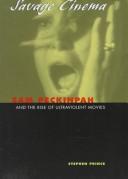
Savage Cinema
0
0
As an Amazon Associate and affiliate partner, Menrva Books earns from qualifying purchases. Learn more
Author Description
More than any other filmmaker, Sam Peckinpah opened the door for graphic violence in movies. In this book, Stephen Prince explains the rise of explicit violence in the American cinema, its social effects, and the relation of contemporary ultraviolence to the radical, humanistic filmmaking that Peckinpah practiced. Prince's account establishes, for the first time, Peckinpah's place as a major filmmaker. This book is essential reading for those interested in Peckinpah, the problem of movie violence, and contemporary American cinema.
Menrva's Summary
THE THESIS
This book investigates the rise of explicit violence in American cinema, using Sam Peckinpah's work as a central case study. Stephen Prince, a noted film scholar, examines the social effects of this graphic content and its connection to Peckinpah's radical, humanistic filmmaking. The book establishes Peckinpah's significance as a major filmmaker for the first time, analyzing the evolution of ultraviolence in American movies. It is crucial for understanding Peckinpah, the discourse surrounding movie violence, and the landscape of contemporary American cinema.
THE SCOPE MAP
- Analysis of Sam Peckinpah's role in popularizing graphic violence in film.
- Exploration of the social impact and reception of explicit violence in movies.
- Connection between contemporary ultraviolence and Peckinpah's humanistic filmmaking style.
- Establishment of Peckinpah's position as a significant filmmaker.
- Examination of the broader context of American cinema history.
- Discussion of the relationship between artistic expression and societal norms regarding violence.
THE AUTHORITY PERSPECTIVE
This book is regarded as essential reading for those interested in Sam Peckinpah, the issue of movie violence, and American cinema. It is praised for establishing Peckinpah's place as a major filmmaker and for its comprehensive analysis of explicit violence. The work is noted for its scholarly approach to connecting artistic practice with societal impact. Its insights into the evolution of cinematic violence remain relevant for contemporary discussions.
Page Count:
282
Publication Date:
1998-01-01
ISBN-10:
0292765827
Non-Fiction
History
Art
Cultural History
Cinema History
Film Studies
American Cinema
Community Tags
Similar Books