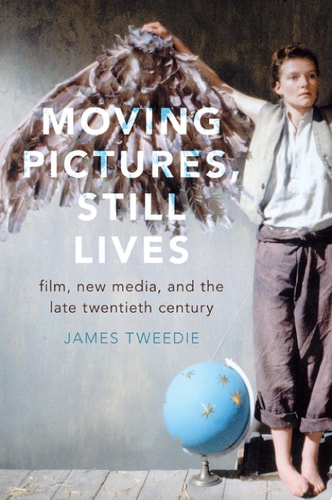
Moving Pictures, Still Lives
0
0
As an Amazon Associate and affiliate partner, Menrva Books earns from qualifying purchases. Learn more
Author Description
Moving Pictures, Still Lives revisits the cinematic and intellectual atmosphere of the late twentieth century. Against the backdrop of the historical fever of the 1980s and 1990s—the rise of the heritage industry, a global museum-building boom, and a cinematic fascination with costume dramas and literary adaptations—it explores the work of artists and philosophers who complicated the usual association between tradition and the past or modernity and the future. Author James Tweedie retraces the archaeomodern turn in films and theory that framed the past as a repository of abandoned but potentially transformative experiments. He examines late twentieth-century filmmakers who were inspired by old media, especially painting, and often viewed those art forms as portals to the modern past. In detailed discussions of Alain Cavalier, Terence Davies, Jean-Luc Godard, Peter Greenaway, Derek Jarman, Agnès Varda, and other key directors, the book concentrates on films that fill the screen with a succession of tableaux vivants, still lifes, illuminated manuscripts, and landscapes. It also considers three key figures—Walter Benjamin, Gilles Deleuze, and Serge Daney—who grappled with the late twentieth century's characteristic concerns, including history, memory, and belatedness. It reframes their theoretical work on film as a mourning play for past revolutions and a means of reviving the possibilities of the modern age (and its paradigmatic medium, cinema) during periods of political and cultural retrenchment. Looking at cinema and the century in the rear-view mirror, the book highlights the unrealized potential visible in the history of film, as well as the cinematic phantoms that remain in the digital age.
Menrva's Summary
THE THESIS
This book investigates how late twentieth-century cinema and theory engaged with the past to challenge conventional understandings of modernity and historical progression. Author James Tweedie, a scholar of film and media, utilizes a framework of 'archaeomodernism' to analyze how filmmakers and philosophers treated the past not as a static relic, but as a dynamic repository of abandoned experiments. By examining the intersection of film, painting, and critical theory, the text argues that these works functioned as a form of mourning for past revolutions while simultaneously seeking to revive the transformative potential of the cinematic medium.
THE SCOPE MAP
What You Will Find
- Analysis of the 'archaeomodern' turn in late 20th-century film and theory.
- Detailed examinations of directors including Alain Cavalier, Terence Davies, Jean-Luc Godard, Peter Greenaway, Derek Jarman, and Agnès Varda.
- Theoretical engagement with the works of Walter Benjamin, Gilles Deleuze, and Serge Daney.
- Exploration of visual motifs such as tableaux vivants, still lifes, and illuminated manuscripts.
Scope Limits
- The book focuses primarily on European cinema and specific theoretical figures rather than a global survey of all film history.
- It does not provide a comprehensive history of the heritage industry, but rather uses it as a contextual backdrop for its primary arguments.
THE AUTHORITY PERSPECTIVE
Scholars and critics recognize this work as a sophisticated contribution to film theory and historiography. Readers frequently note the academic density of the prose, which requires a strong background in critical theory to fully appreciate the author's arguments.
Page Count:
336
Publication Date:
2018-01-01
Publisher:
Oxford University Press
ISBN-10:
0190873892
ISBN-13:
9780190873899
Philosophy
Cultural History
Media Theory
Art History
Cinema History
Film Studies
Community Tags
Similar Books