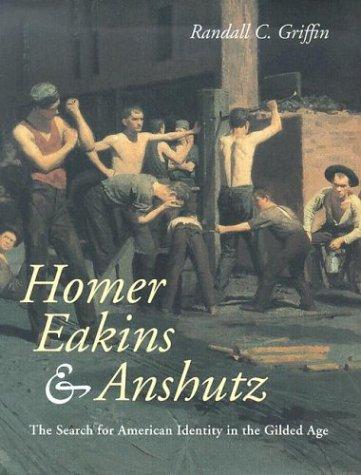
Homer, Eakins, and Anshutz
0
0
As an Amazon Associate and affiliate partner, Menrva Books earns from qualifying purchases. Learn more
Author Description
Randall Griffin's book examines the ways in which artists and critics sought to construct a new identity for America during the era dubbed the Gilded Age because of its leaders' taste for opulence. Artists such as Winslow Homer, Thomas Eakins, and Thomas Anshutz explored alternative "American" themes and styles, but widespread belief in the superiority of European art led them and their audiences to look to the Old World for legitimacy. This rich, never-resolved contradiction between the native and autonomous, on the one hand, and, on the other, the European and borrowed serves as the armature of Griffin's innovative look at how and why the world of art became a key site in the American struggle for identity. Homer, Eakins, and Anshutz will be of importance to all those interested in American culture as well as to specialists in art history and art criticism.
Menrva's Summary
THE THESIS
This book investigates the complex relationship between American artists and European artistic traditions during the Gilded Age, exploring how artists sought to forge a distinct national identity. Randall Griffin examines the efforts of artists like Winslow Homer, Thomas Eakins, and Thomas Anshutz to create new American themes and styles, while simultaneously grappling with the prevailing belief in European art's superiority. This tension between indigenous artistic expression and the need for external validation forms the core of Griffin's analysis of art's role in America's struggle for self-definition. The book delves into the unresolved contradiction that shaped the American art world during this pivotal era.
THE SCOPE MAP
- Analysis of the Gilded Age as a period of artistic identity formation in America.
- Exploration of the works and artistic philosophies of Winslow Homer, Thomas Eakins, and Thomas Anshutz.
- Examination of the influence of European art on American artists and critics.
- Discussion of the tension between native artistic expression and borrowed European styles.
- The role of art in the broader American struggle for cultural identity.
- Insights into the construction of a new identity for America through art.
- Analysis of the relationship between artists and critics in shaping artistic legitimacy.
THE AUTHORITY PERSPECTIVE
Randall Griffin's "Homer, Eakins, and Anshutz" is recognized as an important contribution to the study of American culture and art history. Specialists in art history and criticism will find its examination of the Gilded Age's artistic identity particularly valuable. The book's innovative look at how art became a site for America's struggle for identity is noted for its depth. The jacket copy suggests it will be of importance to all interested in American culture.
Page Count:
192
Publication Date:
2004-01-01
ISBN-10:
0271023295
ISBN-13:
9780271023298
Art
Non-Fiction
History
Art Criticism
Art History
Gilded Age
Community Tags
Similar Books