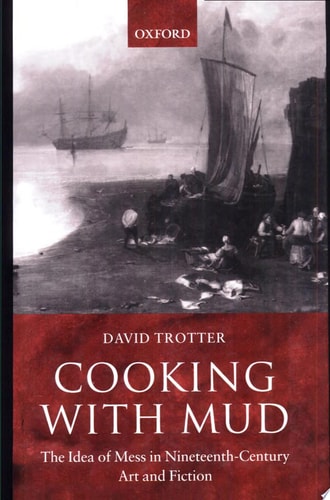
Cooking with Mud: The Idea of Mess in Nineteenth-Century Art and Fiction
0
0
As an Amazon Associate and affiliate partner, Menrva Books earns from qualifying purchases. Learn more
Author Description
Mess is age-old and universal, as phenomenon and as topic. The evidence collected in this book suggests, however, that the second half of the nineteenth century saw the first stirrings in Western culture of a primary interest in mess for its own sake. Messes, like modern identities, happen by accident; their representation in painting and fiction made it possible to think boldly and inventively about chance. Ranging widely--from Turner to Degas, and from Melville to Maupassant and the New Woman writers--this book outlines a style of commentary on modern life in which the ancient dichotomy of order and chaos was supplanted by a distinction between different kinds of mess.
Menrva's Summary
THE THESIS
This book investigates the emergence of mess as a distinct aesthetic and cultural category in Western art and literature during the latter half of the nineteenth century. David Trotter, a scholar of modern literature and culture, examines how the representation of disorder shifted from a binary of order versus chaos to a nuanced exploration of various types of mess. By analyzing works from painters like Turner and Degas alongside writers such as Melville and Maupassant, the author argues that these depictions allowed for new ways of conceptualizing chance and modern identity.
THE SCOPE MAP
What You Will Find
- Analysis of nineteenth-century visual art, including the works of J.M.W. Turner and Edgar Degas.
- Literary critique of authors such as Herman Melville, Guy de Maupassant, and various New Woman writers.
- A theoretical framework exploring the transition from traditional order-chaos dichotomies to a typology of mess.
- Examination of how accidental occurrences in art and fiction reflect the development of modern identity.
THE AUTHORITY PERSPECTIVE
Scholars and critics recognize this work as a sophisticated contribution to the study of nineteenth-century aesthetics and cultural history. Readers frequently note the academic density of the prose and the breadth of the interdisciplinary analysis provided by the author.
Page Count:
352
Publication Date:
2000-04-20
Publisher:
Oxford University Press
ISBN-10:
0198185030
ISBN-13:
9780198185031
Nineteenth century
Aesthetics
Art
Art History
Literature
Literary Criticism
Art Criticism
Community Tags
Similar Books