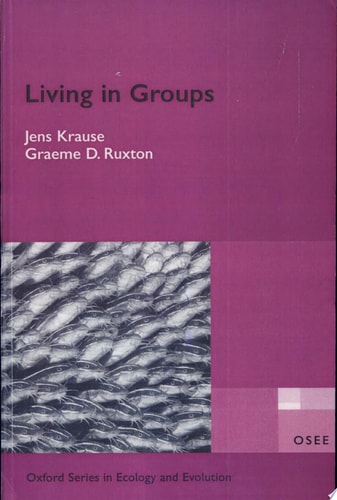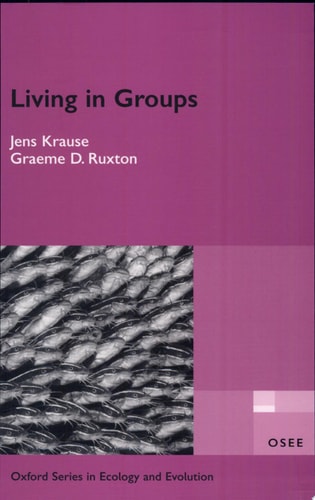
Living in Groups
0
0
As an Amazon Associate and affiliate partner, Menrva Books earns from qualifying purchases. Learn more
Author Description
Shoals, swarms, flocks, herds--group formation is a widespread phenomenon in animal populations. It raises several interesting questions for behavioral ecologists. Why do animals form and live in groups, and what factors influence the ways in which they do this? What are the costs and benefits to an animal of group living? How are these influenced by ecological factors? The authors familiarize the reader with cutting-edge ideas on the ecology and evolution of group-living animals, and detail fascinating case studies demonstrating them in action.
Menrva's Summary
THE THESIS
This book investigates the evolutionary drivers and ecological consequences of group-living behavior in animal populations. Authors Graeme D. Ruxton and Jens Krause synthesize behavioral ecology research to explain why social structures like shoals, swarms, and herds persist despite the inherent costs of competition. The text provides a framework for understanding how environmental pressures and individual fitness trade-offs shape the formation and maintenance of these groups.
THE SCOPE MAP
What You Will Find
- Analysis of the costs and benefits associated with group living
- Examination of ecological factors influencing social behavior
- Integration of theoretical models with empirical case studies
- Discussion of evolutionary mechanisms in animal populations
THE AUTHORITY PERSPECTIVE
Experts recognize this work as a foundational text for students and researchers in behavioral ecology. Readers frequently note the clarity with which the authors bridge complex evolutionary theory and observable animal behavior.
Page Count:
224
Publication Date:
2002-12-19
Publisher:
Oxford University Press
ISBN-10:
0198508182
ISBN-13:
9780198508182
Science
Evolution
Biology
Ecology
Zoology