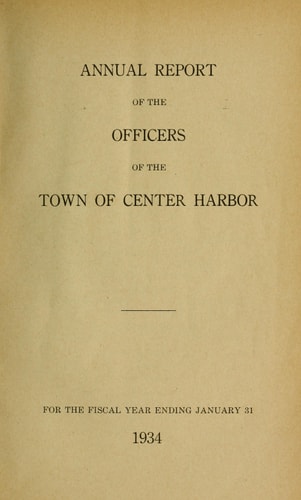
Pericyclic Reactions
0
0
As an Amazon Associate and affiliate partner, Menrva Books earns from qualifying purchases. Learn more
Author Description
Pericyclic reaction - the third type of organic reaction mechanism along with ionic and radical reactions - include some of the most powerful synthetically useful reactions, like the Diels - Alder reaction, 1,3- dipolar cycloadditions, the Alder ene reaction, Claisen rearrangements, the 2,3-Wittig rearrangement, diimide reduction, sulfoxide elimination and many others. These reactions are characterised by having cyclic transition structures, and also have highly predictable stereochemical features. Every organic chemist must be able to recognize the various types of pericyclic reaction and know something of their mechanisms and the factors that affect how well they work in organic synthesis. This book identifies the four main classes of pericyclic reaction, and discusses the main characteristics of the most important class, cycloadditions - providing a working knowledge, based on real examples, of their scope, patterns of reactivity, and stereochemistry. Then it explains the main features using ideas based in molecular orbital theory, but ( as in the companion book by A. J. Kirby on Stereoelectronic Effects ) without mathematics. It presents the Woodward - Hoffmann rules in the form of two all-encompassing rules, one for thermal reactions and its opposite for photochemical reactions. These rules are explained in detail and carefully illustrated, so that you will be able to predict the stereochemical outcome for any pericyclic reaction. The remaining chapters use this theoretical framework to show how the rules work with the other three classes of pericyclic reactions - electrocyclic reactions, sigmatropic rearrangements and group transfer reactions. By the end of the book, you will be able to recognise any pericyclic reaction and predict with confidence whether it is allowed, and with what stereochemistry, and you will have a working knowledge of the range of pericyclic reactions available to the synthetic organic chemist.
Menrva's Summary
THE THESIS
This book investigates the fundamental mechanisms and predictive rules governing pericyclic reactions in organic synthesis. Ian Fleming, a respected authority in organic chemistry, provides a structured framework for understanding these reactions without relying on complex mathematical derivations. By utilizing molecular orbital theory, the text equips students and professionals with the ability to identify reaction types and predict stereochemical outcomes with high accuracy.
THE SCOPE MAP
What You Will Find
- Classification of the four primary classes of pericyclic reactions including cycloadditions, electrocyclic reactions, sigmatropic rearrangements, and group transfer reactions.
- Application of the Woodward-Hoffmann rules for both thermal and photochemical reaction pathways.
- Analysis of reaction scope, patterns of reactivity, and stereochemical features using real-world synthetic examples.
- A conceptual approach to molecular orbital theory that prioritizes qualitative understanding over quantitative calculation.
THE AUTHORITY PERSPECTIVE
Experts and educators frequently cite this primer as a foundational resource for students seeking to master the logic of pericyclic mechanisms without being overwhelmed by advanced mathematics. The text is widely regarded for its clarity and its practical utility in synthetic organic chemistry laboratories.
Page Count:
90
Publication Date:
1998-11-19
Publisher:
Oxford University Press
ISBN-10:
0198503075
ISBN-13:
9780198503071
Science
Organic chemistry
Chemistry
textbook
Fiction thrillers
Community Tags
Other Editions(5)



Similar Books




Reader Comments
Share Your Thoughts
No comments yet. Be the first to share your thoughts!