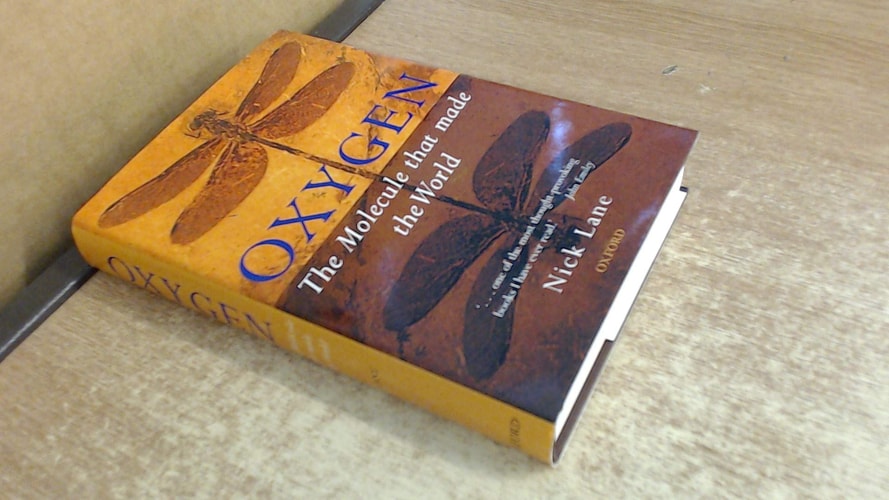
Oxygen: The Molecule that Made the World
0
0
As an Amazon Associate and affiliate partner, Menrva Books earns from qualifying purchases. Learn more
Author Description
Three hundred million years ago, dragonflies grew as big as seagulls, with wingspans nearly a yard across. Researchers claim they could have flown only if the air had contained more oxygen than today-probably as much as 35 per cent. But oxygen is a toxic gas. Fruit flies raised at twice the normal level of oxygen live half as long as their siblings. If atmospheric oxygen reached 35 per cent in the Carboniferous, why did oxygen promote exuberant growth, instead of rapid aging and death?This is just one of the puzzles Nick Lane answers in Oxygen. Lane takes the reader on an enthralling journey, as gripping as a thriller, as he unravels the unexpected ways in which oxygen spurred the evolution of life and death. The book explains far more than the size of ancient insects: it shows how oxygen underpins the origin of biological complexity, the birth of photosynthesis, the sudden evolution of animals, the need for two sexes, the accelerated aging of cloned animals like Dolly the sheep, and the surprisingly long lives of bats and birds. Drawing on this grand evolutionary canvas, Oxygen offers fresh perspectives on our own lives and deaths, explaining modern killer diseases, why we age, and what we can do about it.Advancing revelatory new ideas, following chains of evidence, the book ranges through many disciplines, from environmental sciences to molecular medicine. The result is a captivating vision of contemporary science and a humane synthesis of our place in nature. This remarkable book will redefine the way we think about the world.
Menrva's Summary
THE THESIS
This book investigates the paradoxical role of oxygen as both the fundamental driver of biological complexity and a primary agent of cellular decay and aging. Nick Lane, a biochemist and writer, synthesizes evidence from environmental science, evolutionary biology, and molecular medicine to construct a framework explaining how atmospheric oxygen levels have dictated the trajectory of life on Earth. He argues that the same chemical properties that allow for high-energy metabolism also necessitate the biological mechanisms that eventually lead to organismal senescence.
THE SCOPE MAP
What You Will Find
- Analysis of atmospheric oxygen fluctuations throughout geological time periods like the Carboniferous.
- Examination of the biochemical link between oxygen metabolism and the evolution of sexual reproduction.
- Discussion of the molecular mechanisms behind aging, including oxidative stress and mitochondrial function.
- Synthesis of data regarding the longevity of various species, such as bats and birds, compared to other mammals.
THE AUTHORITY PERSPECTIVE
Experts and readers alike identify this text as a highly accessible yet rigorous examination of evolutionary biochemistry. The prose is noted for its ability to translate complex molecular interactions into a coherent narrative regarding the history of life on Earth.
Page Count:
384
Publication Date:
2003-04-24
Publisher:
Oxford University Press
ISBN-10:
0198508034
ISBN-13:
9780198508038
Science
Natural History
Chemistry
Medicine
Evolution
Oxygen
Biology
Community Tags
Other Editions(4)
Similar Books
Reader Comments
Share Your Thoughts
No comments yet. Be the first to share your thoughts!