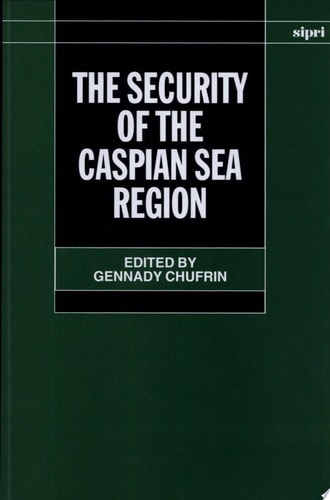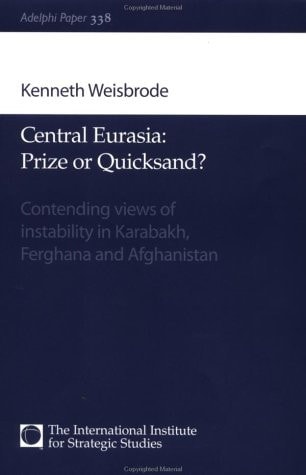
Central Eurasia - Prize or Quicksand?: Contending Views of Instability in Karabakh, Ferghana and Afghanistan
0
0
As an Amazon Associate and affiliate partner, Menrva Books earns from qualifying purchases. Learn more
Author Description
This paper argues that the major powers have played a central role in fomenting a logic of regional rivalry that has prevented Central Eurasia from developing the critical foundations of co-operation that are necessary to produce the kind of post-Soviet stability one finds in Europe. While the paper does not dismiss the many internal causes of instability, it chooses to focus on the significance of the region to outside powers and the role those powers have played, both on the ground and in the symbolic realm. It does so by tracing the involvement of major powers in three particularly rich areas of instability - Karabakh, Ferghana and Afghanistan. Each case illustrates divergences between rhetorical policy and actual interests, and shows how the former have hindered the latter.
Menrva's Summary
THE THESIS
This paper investigates whether the instability in Central Eurasia is primarily a product of internal regional dynamics or the result of external interference by major global powers. Kenneth Weisbrode, a researcher specializing in regional security, utilizes a comparative analysis of three distinct conflict zones to argue that the strategic rivalry of outside powers has actively undermined the development of regional cooperation. He posits that the disconnect between the rhetorical policies of these powers and their actual geopolitical interests has created a persistent cycle of instability that mirrors the lack of post-Soviet integration seen elsewhere.
THE SCOPE MAP
What You Will Find
- Comparative analysis of conflict dynamics in Karabakh, Ferghana, and Afghanistan.
- Examination of the role of major powers in shaping regional security environments.
- Evaluation of the gap between diplomatic rhetoric and actual state interests.
- Assessment of the symbolic and physical influence of external actors on post-Soviet stability.
THE AUTHORITY PERSPECTIVE
Experts in the field of Eurasian studies frequently cite this paper as a concise and focused examination of the geopolitical pressures facing the region. It is often utilized by students and policy analysts to understand the historical context of external involvement in Central Asian stability.
Page Count:
96
Publication Date:
2002-02-07
Publisher:
Oxford University Press
ISBN-10:
0198510705
ISBN-13:
9780198510703
History
International relations
Geopolitics
Politics & Government
Central Asia
Community Tags
Similar Books