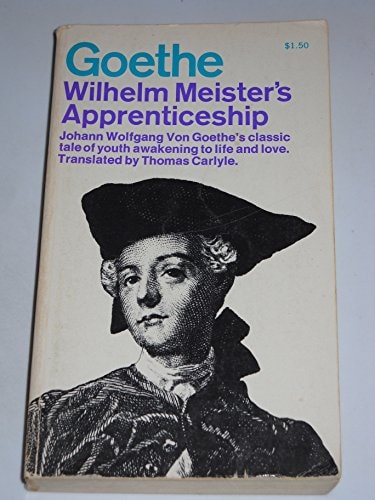
Wilhelm Meister's Apprenticeship
0
0
As an Amazon Associate and affiliate partner, Menrva Books earns from qualifying purchases. Learn more
Author Description
This work has been selected by scholars as being culturally important, and is part of the knowledge base of civilization as we know it. This work was reproduced from the original artifact, and remains as true to the original work as possible. Therefore, you will see the original copyright references, library stamps (as most of these works have been housed in our most important libraries around the world), and other notations in the work.This work is in the public domain in the United States of America, and possibly other nations. Within the United States, you may freely copy and distribute this work, as no entity (individual or corporate) has a copyright on the body of the work.As a reproduction of a historical artifact, this work may contain missing or blurred pages, poor pictures, errant marks, etc. Scholars believe, and we concur, that this work is important enough to be preserved, reproduced, and made generally available to the public. We appreciate your support of the preservation process, and thank you for being an important part of keeping this knowledge alive and relevant.
Menrva's Summary
THE PULSE
Wilhelm Meister, a young man of the merchant class, abandons his family's commercial expectations to pursue a life of artistic and theatrical fulfillment. Driven by a desire for self-actualization, Wilhelm navigates a series of encounters with diverse social circles, ranging from traveling actors to the aristocracy. He faces the tension between his romanticized view of the theater and the pragmatic realities of human relationships and social duty. The narrative follows his development through a series of episodic experiences that challenge his perceptions of art, love, and personal identity.
INSIDE THE PAGES
- Exploration of the Bildungsroman genre structure
- Integration of theatrical performance as a metaphor for life
- Philosophical inquiries into the nature of human development
- Episodic narrative progression
- Examination of class mobility and social expectations
- Inclusion of lyrical poetry and songs within the prose
- Focus on the tension between artistic idealism and bourgeois reality
- Character-driven interactions that serve as moral lessons
THE COLLECTIVE ECHO
Readers and critics frequently identify this work as a foundational text for the development of the novel form in European literature. Discussion often centers on the protagonist's gradual transition from naive idealism to a more grounded understanding of his place in society. Scholars highlight the intricate balance between the narrative's philosophical depth and its detailed observation of 18th-century social structures. Many readers note that the pacing is deliberate, reflecting the slow and often non-linear process of personal maturation. The work remains a primary subject of study for those interested in the evolution of the individual within the context of Enlightenment thought.
Page Count:
542
Publication Date:
1962-01-01
Publisher:
Collier Books
ISBN-10:
0020510403
ISBN-13:
9780020510406
Music
Historical
German
Philosophical
Literary
Bildungsroman
Literature & Fiction
Classic Literature