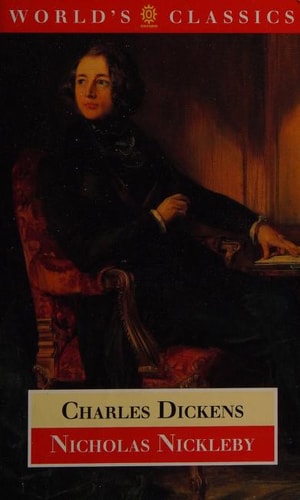
Nicholas Nickleby
0
0
As an Amazon Associate and affiliate partner, Menrva Books earns from qualifying purchases. Learn more
Author Description
When Nicholas Nickleby is left penniless after his father's death, he appeals to his wealthy uncle to help him find work and to protect his mother and sister. But Ralph Nickleby proves both hard-hearted and unscrupulous, and Nicholas finds himself forced to make his own way in the world. His adventures gave Dickens the opportunity to portray an extraordinary gallery of rogues and eccentrics: Wackford Squeers, the tyrannical headmaster of Dotheboys Hall, a school for unwanted boys; the slow-witted orphan Smike, rescued by Nicholas; and the gloriously theatrical Mr and Mrs Crummles and their daughter, the 'infant phenonenon'. Like many of Dickens's novels, Nicholas Nickleby is characterised by his outrage at cruelty and social injustice, but it is also a flamboyantly exuberant work, revealing his comic genius at its most unerring.
Menrva's Summary
THE PULSE
After the sudden death of his father leaves his family destitute, young Nicholas Nickleby must navigate a predatory society while attempting to protect his mother and sister from his callous uncle. Nicholas seeks employment and stability, yet he is repeatedly thwarted by the machinations of Ralph Nickleby, a man whose greed dictates his treatment of his kin. The narrative follows Nicholas as he encounters a diverse array of characters, ranging from the abusive staff of Dotheboys Hall to a traveling theatrical troupe. Written in a third-person omniscient perspective, the novel tracks the protagonist's moral development as he confronts systemic cruelty and personal betrayal.
INSIDE THE PAGES
- Extensive use of caricature to represent social archetypes
- Satirical critique of the Victorian educational system
- Episodic narrative structure typical of serial publication
- Integration of theatrical performance as a thematic motif
- Focus on the contrast between moral integrity and avarice
- Detailed descriptions of London's urban landscape
- Development of a complex, multi-layered plot involving long-lost relatives
- Shift between dark, somber settings and exuberant, comedic scenes
THE COLLECTIVE ECHO
Readers and critics frequently highlight the novel's balance between biting social commentary and Dickens's signature comic flair. Discussion often centers on the vividness of the secondary characters, who are often cited as some of the most memorable figures in the author's bibliography. Many observers note the effectiveness of the Dotheboys Hall chapters in exposing the harsh realities of nineteenth-century schooling. The pacing is often described as energetic, reflecting the serial nature of its original release. Scholars frequently emphasize how the work serves as a pivotal example of the author's ability to blend moral outrage with high-spirited entertainment.
Page Count:
870
Publication Date:
1990-01-01
Publisher:
Oxford University Press, Incorporated
ISBN-10:
0192817949
ISBN-13:
9780192817945
Historical Fiction
Young men
Victorian
Social Satire
Poor families
Classic Literature
Bildungsroman
England
Theatrical companies
Community Tags
Other Editions(9)
Similar Books
Reader Comments
Share Your Thoughts
No comments yet. Be the first to share your thoughts!