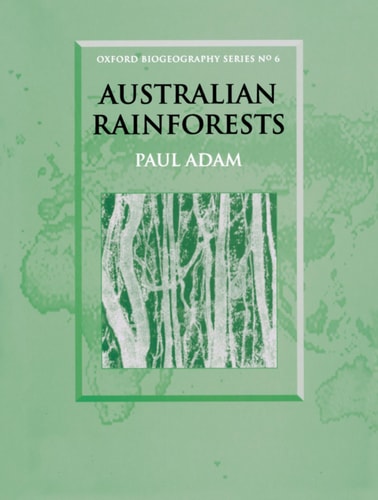
Australian Rainforests
0
0
As an Amazon Associate and affiliate partner, Menrva Books earns from qualifying purchases. Learn more
Author Description
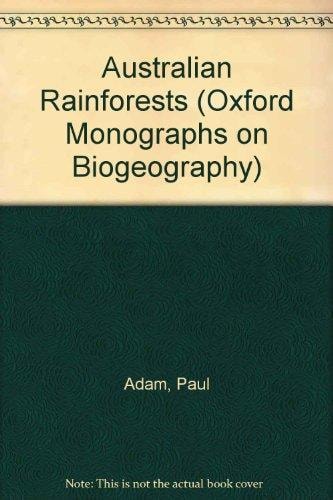
Once the dominant vegetation type of the entire continent, the Australian rainforests have shrunk over many millions of years to their present limited size. The forests and their history, however, continue to hold valuable lessons for biogeographers and environmentalists. This book gives a general account of the Australian rainforests, detailing their composition and location as well as how their present distribution has evolved. Throughout, the book provides a broad, biogeographical framework that enables new information to be considered from a global perspective. The book concludes with a historical account of human interaction with the rainforest from late Pleistocene times to the 1980s. Biogeographers, botanists, and ecologists at all levels will find this to be a rich source of information and an inspiration for continuing efforts to conserve existing rainforests around the world.
Menrva's Summary
THE THESIS
This book investigates the evolutionary history, current distribution, and ecological significance of Australian rainforests within a global biogeographical context. Paul Adam, an expert in plant ecology, synthesizes botanical and historical data to explain how these ecosystems have contracted over millions of years. The text provides a structured framework for understanding the environmental factors that shape rainforest composition and the long-term impact of human interaction on these landscapes.
THE SCOPE MAP
What You Will Find
- Detailed analysis of the historical contraction of rainforest vegetation across the Australian continent.
- Examination of the geographical distribution and botanical composition of existing forest remnants.
- A comprehensive timeline of human interaction with rainforest environments from the late Pleistocene to the 1980s.
- A global biogeographical framework designed to assist researchers in interpreting new ecological data.
THE AUTHORITY PERSPECTIVE
Experts and academics recognize this work as a foundational text for understanding the specific ecological challenges facing Australian rainforests. Readers frequently note the academic density of the prose, which serves as a valuable resource for botanists and environmental scientists alike.
Page Count:
328
Publication Date:
1994-11-24
Publisher:
Oxford University Press
ISBN-10:
0198548729
ISBN-13:
9780198548720
Nature
Science
Ecology
Botany
Australia
Rain forests
Biogeography