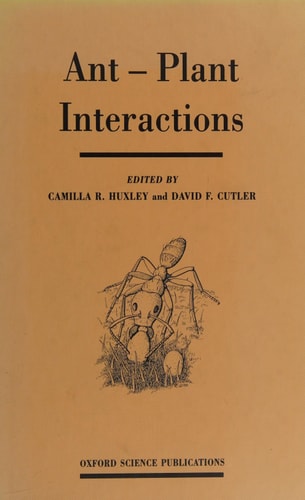
Ant-Plant Interactions
0
0
As an Amazon Associate and affiliate partner, Menrva Books earns from qualifying purchases. Learn more
Author Description
This book presents current research on all types of ant-plant interactions, and concentrates on understanding these often complex relationships in evolutionary and ecological terms. The range of interactions varies from herbivory (leaf-cutter ants) to complex symbiosis. Many ants prey on plant pests, thus protecting the plant from harm, receiving in exchange nectar and/or nest sites. In some cases the ants tend and protect other insects such as butterfly larvae or Homopterans (which include the aphids and cicadas) which may benefit the ants at the expense of both the host plant and the other insects. Some ants are known to be seed dispersers, and in at least one plant (cocoa) they appear to affect rates of pollination. A significant proportion of these interactions exhibit a high degree of mutualism, making this book part of a growing literature on the ecological determinants of mutualistic behaviour. The thirty-seven chapters by more than fifty contributors range in geographical coverage from northern and southern temperate zones, to the New World tropics, to Australia and South-east Asia. The emphasis throughout, even in the more descriptive chapters, is on possible explanations for observed phenomena. Workers in ecology, evolution, and behavior will welcome this compendium of information on a subject that has become a modern testing ground for evolutionary ecology.
Menrva's Summary
THE THESIS
This volume investigates the diverse evolutionary and ecological mechanisms that govern the complex, often mutualistic relationships between ant species and plant life. Edited by Camilla R. Huxley and David F. Cutler, the text compiles research from over fifty contributors to analyze how these interactions influence survival, protection, and reproduction. The authors utilize a broad comparative framework to evaluate how ants function as predators, protectors, and pollinators within various global ecosystems.
THE SCOPE MAP
What You Will Find
- Analysis of mutualistic behaviors including herbivory, seed dispersal, and pollination.
- Examination of tripartite relationships involving ants, host plants, and secondary insects like aphids or butterfly larvae.
- Global geographical coverage spanning temperate zones, New World tropics, Australia, and South-east Asia.
- Theoretical frameworks for understanding the ecological determinants of symbiosis.
THE AUTHORITY PERSPECTIVE
Experts recognize this compendium as a foundational reference for researchers in evolutionary ecology and behavioral biology. The text is noted for its academic rigor and its role in establishing a framework for studying complex symbiotic interactions in nature.
Page Count:
624
Publication Date:
1991-10-03
Publisher:
Oxford University Press
ISBN-10:
0198546394
ISBN-13:
9780198546399
Science
Evolutionary Biology
Biology
Ecology
Ants
Entomology
Botany
Community Tags
Similar Books