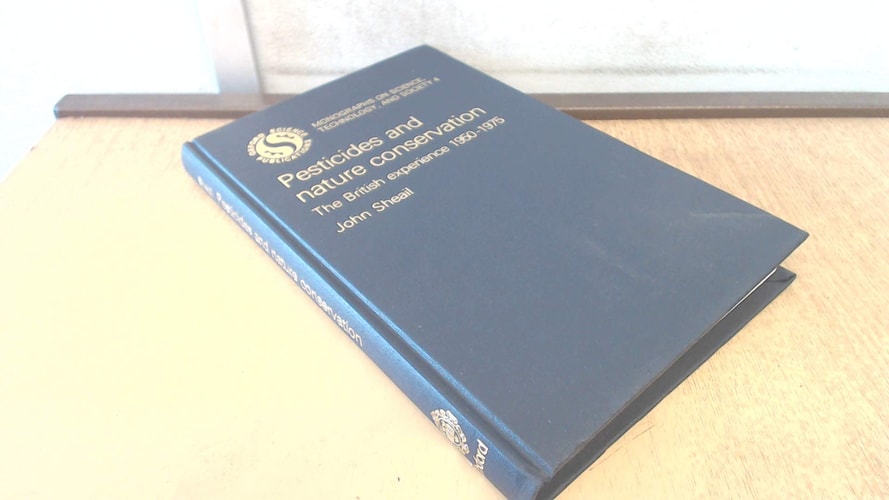
Pesticides and Nature Conservation: The British Experience, 1950-1975
0
0
As an Amazon Associate and affiliate partner, Menrva Books earns from qualifying purchases. Learn more
Author Description
Drawing from official files, published reports, and the recollections of key individuals, this historical study recounts how conservationists--and, in particular, the Nature Conservancy--discovered the harmful and unexpected side-effects of the large-scale use of pesticides on wildlife in Britain. The author, a historical geographer, provides an unbiased and insightful account of how researchers and policy makers responded to this perceived threat over a period of twenty-five years. The lessons to be drawn from this experience have a broad applicability that will interest agriculturalists, conservationists, ecologists, and all others concerned with wildlife and nature.
Menrva's Summary
THE THESIS
This book investigates the historical intersection of agricultural pesticide application and the emergence of nature conservation policy in Britain between 1950 and 1975. John Sheail, a historical geographer, utilizes a combination of official government archives, contemporary scientific reports, and oral histories from key participants to reconstruct the timeline of environmental awareness. The text argues that the response to pesticide-related wildlife decline was a complex negotiation between scientific discovery, public concern, and legislative action. By examining this specific quarter-century, the author provides a framework for understanding how environmental threats are identified and managed within a bureaucratic system.
THE SCOPE MAP
What You Will Find
- A detailed historical analysis of the British Nature Conservancy's role in monitoring pesticide impact.
- Case studies documenting the decline of specific wildlife populations due to chemical exposure.
- An examination of the policy-making process regarding agricultural chemical regulation.
- A synthesis of primary source materials including government files and personal recollections.
THE AUTHORITY PERSPECTIVE
Experts recognize this work as a foundational historical account of environmental policy development in the mid-twentieth century. Readers frequently note the academic density of the prose and the meticulous use of archival evidence to support the author's conclusions.
Page Count:
288
Publication Date:
1985-10-03
Publisher:
Oxford University Press
ISBN-10:
0198541503
ISBN-13:
9780198541509
Science
History
Agriculture
Ecology
Pesticides
Nature conservation
Community Tags
Similar Books