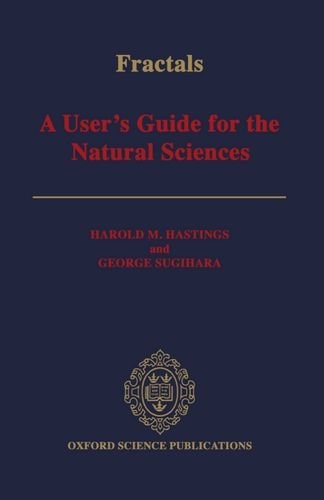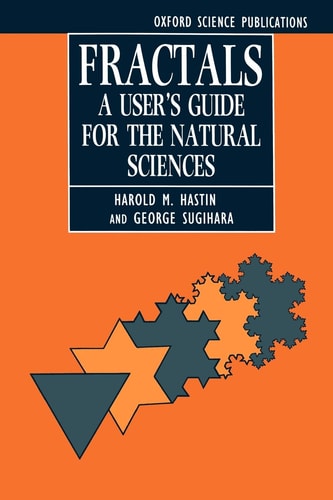
Fractals: A User's Guide for the Natural Sciences
0
0
As an Amazon Associate and affiliate partner, Menrva Books earns from qualifying purchases. Learn more
Author Description
This insightful work explains Mandelbrot's fractal geometry and describes some of its most interesting applications. Fractal geometry exploits a characteristic property of the real world--self-similarity--to find simple rules for the assembly of complex natural objects. Beginning with the foundations of measurement in Euclidean geometry, the authors progress from analogues in the geometry of random fractals to applications spanning the natural sciences, including the developmental biology of neurons and pancreatic islets, fluctuations of bird populations, patterns in vegetative ecosystems, and even earthquake models. Written to enable students and researchers to master the methods of this timely subject, the book steers a middle course between the formality of many papers in mathematics and the informality of picture-orientated books on fractals. It is both a logically developed text and an essential "fractals for users" handbook. It is an essential resource for researchers and students in ecology, biology, applied mathematics, and plant and environmental sciences.
Menrva's Summary
THE THESIS
This book investigates how the principles of fractal geometry and self-similarity can be applied to model complex structures and phenomena within the natural sciences. Authors George Sugihara and Harold M. Hastings provide a bridge between abstract mathematical theory and empirical scientific research. By moving from Euclidean foundations to the analysis of random fractals, they establish a practical framework for researchers to quantify complexity in biological and environmental systems. The text serves as a methodological guide for applying these geometric rules to real-world data sets.
THE SCOPE MAP
What You Will Find
- Mathematical foundations of self-similarity and fractal measurement
- Applications in developmental biology, specifically regarding neurons and pancreatic islets
- Ecological modeling of bird population fluctuations and vegetative patterns
- Methodologies for applying fractal geometry to earthquake prediction models
THE AUTHORITY PERSPECTIVE
Experts recognize this work as a balanced technical resource that avoids excessive mathematical abstraction while maintaining scientific rigor. It is frequently cited as a foundational handbook for students and researchers seeking to integrate fractal analysis into their specific fields of study.
Page Count:
248
Publication Date:
1994-01-27
Publisher:
Oxford University Press
ISBN-10:
0198545975
ISBN-13:
9780198545972
Science
Ecology
Biology
Mathematics
Fractals