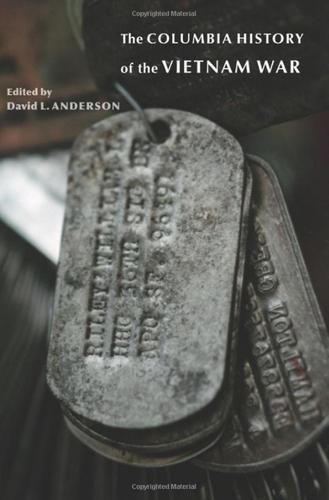
The Columbia History of the Vietnam War
0
0
As an Amazon Associate and affiliate partner, Menrva Books earns from qualifying purchases. Learn more
Author Description
Rooted in recent scholarship, The Columbia History of the Vietnam War offers profound new perspectives on the political, historical, military, and social issues that defined the war and its effect on the United States and Vietnam. Laying the chronological and critical foundations for the volume, David L. Anderson opens with an essay on the Vietnam War's major moments and enduring relevance. Mark Philip Bradley follows with a reexamination of Vietnamese revolutionary nationalism and the Vietminh-led war against French colonialism. Richard H. Immerman revisits Eisenhower's and Kennedy's efforts at nation building in South Vietnam, and Gary R. Hess reviews America's military commitment under Kennedy and Johnson. Lloyd C. Gardner investigates the motivations behind Johnson's escalation of force, and Robert J. McMahon focuses on the pivotal period before and after the Tet Offensive. Jeffrey P. Kimball then makes sense of Nixon's paradoxical decision to end U.S. intervention while pursuing a destructive air war. John Prados and Eric Bergerud devote essays to America's military strategy, while Helen E. Anderson and Robert K. Brigham explore the war's impact on Vietnamese women and urban culture. Melvin Small recounts the domestic tensions created by America's involvement in Vietnam, and Kenton Clymer traces the spread of the war to Laos and Cambodia. Concluding essays by Robert D. Schulzinger and George C. Herring account for the legacy of the war within Vietnamese and American contexts and diagnose the symptoms of the "Vietnam syndrome" evident in later debates about U.S. foreign policy. America's experience in Vietnam continues to figure prominently in discussions about strategy and defense, not to mention within discourse on the identity of the United States as a nation. Anderson's expert collection is therefore essential to understanding America's entanglement in the Vietnam War and the conflict's influence on the nation's future interests abroad.
Menrva's Summary
THE THESIS
The Columbia History of the Vietnam War seeks to provide a comprehensive and nuanced understanding of the Vietnam War, examining its political, historical, military, and social dimensions and its lasting impact on both the United States and Vietnam. Edited by David L. Anderson, the volume features essays by leading scholars that re-examine key moments, from Vietnamese revolutionary nationalism and early U.S. nation-building efforts to the escalation of American involvement, the Tet Offensive, and the eventual U.S. withdrawal. The collection also explores the war's impact on Vietnamese women and urban culture, the domestic tensions it created in America, and its extension into Laos and Cambodia. Ultimately, the book aims to illuminate the war's complex legacy and its continued relevance to American foreign policy and national identity.
THE SCOPE MAP
- An overview of the Vietnam War's major moments and enduring relevance.
- Reexamination of Vietnamese revolutionary nationalism and the war against French colonialism.
- Analysis of U.S. nation-building efforts in South Vietnam under Eisenhower and Kennedy.
- Review of America's military commitment under Kennedy and Johnson.
- Investigation into the motivations behind Johnson's escalation of force.
- Focus on the pivotal period before and after the Tet Offensive.
- Examination of Nixon's decisions regarding U.S. intervention and air war.
- Essays on America's military strategy and the war's impact on Vietnamese women and urban culture.
- Account of domestic tensions created by America's involvement.
- Tracing the spread of the war to Laos and Cambodia.
- Analysis of the war's legacy within Vietnamese and American contexts.
- Diagnosis of the "Vietnam syndrome" in later foreign policy debates.
THE AUTHORITY PERSPECTIVE
This collection is regarded as an essential resource for understanding the Vietnam War, drawing on recent scholarship to offer new perspectives on the conflict's multifaceted nature. The essays collectively provide a detailed chronological and thematic exploration, covering military strategy, political decisions, and social impacts on both sides of the conflict. Its examination of the war's enduring relevance and its influence on American foreign policy and national identity makes it a significant contribution to the historical record. The book is recognized for its depth and the expertise of its contributors in dissecting the complexities of America's entanglement in Vietnam.
Page Count:
462
Publication Date:
2011-01-01
ISBN-10:
0231134819
ISBN-13:
9780231134804
History
Non-Fiction
Political History
Social History
Military History
Community Tags
Other Editions(2)
Similar Books







Reader Comments
Share Your Thoughts
No comments yet. Be the first to share your thoughts!