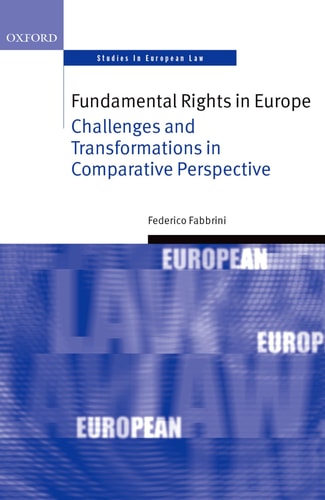
Fundamental Rights in Europe
0
0
As an Amazon Associate and affiliate partner, Menrva Books earns from qualifying purchases. Learn more
Author Description
The European architecture for the protection of fundamental rights combines the legal regimes of the state, the European Union, and the European Convention on Human Rights. The purpose of this book is to analyse the implications of this multilevel architecture and to examine the dynamics that spring from the interaction between different human rights standards in Europe.The book adopts a comparative approach by comparing the European system with the federal system of the United States. It identifies two recurrent challenges in the interplay between different state and transnational human rights standards - a challenge of ineffectiveness and a challenge of inconsistency. These challenges arise when transnational law operates either as a floor or as a ceiling of protection for a specific human right.The comparison is explained through four in depth case studies - the right to due process for suspected terrorists, the right to vote for non-citizens, the right to strike and the right to abortion. On the basis of these case studies, the book then seeks to draw a general model for the protection of fundamental rights - so-called 'neo-federal.' This model systematically explains the constitutional dynamics at play in multilevel systems characterized by a plurality of sources and institutions for the protection of fundamental rights.
Menrva's Summary
THE THESIS
This book investigates the constitutional implications and structural dynamics of the multilevel architecture governing fundamental rights protection across Europe. Federico Fabbrini, a scholar of constitutional and European law, utilizes a comparative framework to evaluate how the European Union, the European Convention on Human Rights, and individual state regimes interact. He argues that this complex interplay creates recurring challenges of ineffectiveness and inconsistency, ultimately proposing a 'neo-federal' model to explain the constitutional mechanics of these overlapping legal systems.
THE SCOPE MAP
What You Will Find
- Comparative analysis between the European human rights system and the United States federal model.
- Examination of the 'floor' and 'ceiling' effects of transnational law on domestic rights protection.
- Four detailed case studies covering due process for suspected terrorists, voting rights for non-citizens, the right to strike, and abortion access.
- A theoretical framework defining the 'neo-federal' model for managing institutional plurality in rights protection.
THE AUTHORITY PERSPECTIVE
Legal scholars and practitioners frequently cite this work as a significant contribution to the understanding of European constitutionalism and the complexities of multi-layered legal regimes. Experts highlight the book's rigorous comparative methodology and its utility for those analyzing the intersection of national and transnational human rights standards.
Page Count:
352
Publication Date:
2014-04-13
Publisher:
Oxford University Press
ISBN-10:
0198702043
ISBN-13:
9780198702047
United States
Human rights
Law
Constitutional Law
European Law