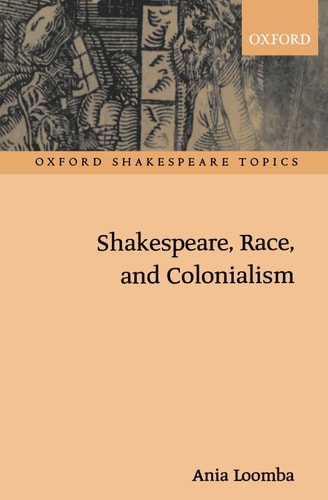
Shakespeare, Race, and Colonialism
0
0
As an Amazon Associate and affiliate partner, Menrva Books earns from qualifying purchases. Learn more
Author Description
Did Shakespeare and his contemporaries think at all in terms of "race"? Examining the depiction of cultural, religious, and ethnic difference in Shakespeare's plays, Ania Loomba considers how seventeenth-century ideas differed from the later ideologies of "race" that emerged during colonialism, as well as from older ideas about barbarism, blackness, and religious difference. Accessible yet nuanced analysis of the plays explores how Shakespeare's ideas of race were shaped by beliefs about color, religion, nationality, class, money and gender.
Menrva's Summary
THE THESIS
This book investigates whether Shakespeare and his contemporaries conceptualized human difference through the lens of modern racial ideology or through earlier frameworks of religion, class, and barbarism. Ania Loomba, a scholar specializing in early modern literature and postcolonial studies, utilizes historical context and textual analysis to deconstruct the evolution of racial thought. She argues that seventeenth-century perceptions of difference were fluid and multifaceted, shaped by a complex interplay of color, nationality, gender, and economic status rather than a singular, static definition of race.
THE SCOPE MAP
What You Will Find
- Analysis of cultural, religious, and ethnic depictions in Shakespearean drama
- Comparative study of seventeenth-century ideologies versus later colonial racial constructs
- Examination of the intersectionality between race, class, money, and gender
- Historical contextualization of terms like barbarism and blackness in the early modern period
THE AUTHORITY PERSPECTIVE
Scholars and students frequently cite this work as a foundational text for understanding the intersection of early modern literature and postcolonial theory. Readers often note the clarity of the prose, which balances academic rigor with accessibility for those new to the subject matter.
Page Count:
208
Publication Date:
2002-11-07
Publisher:
Oxford University Press
ISBN-10:
0198711743
ISBN-13:
9780198711742
History
In literature
Literary Criticism