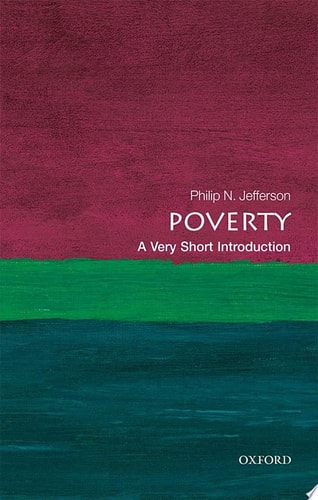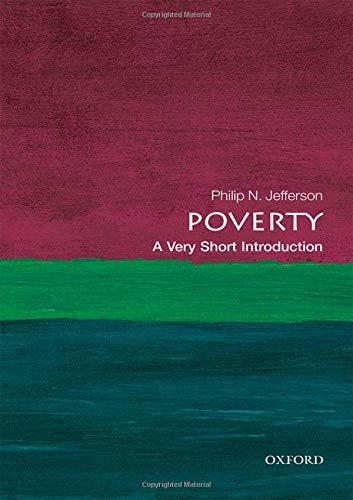
Poverty: A Very Short Introduction
0
0
As an Amazon Associate and affiliate partner, Menrva Books earns from qualifying purchases. Learn more
Author Description
No one wants to live in poverty. Few people would want others to do so. Yet, we find ourselves in a situation where millions of people worldwide live in poverty. According to the World Bank in 2010, 1.2 billion people lived below the extreme poverty line with an income of US $1.25 or less a day and 2.4 billion lived on less than US $2 a day. Why is that? What has been done about it in the past? And what is being done about it now?In this Very Short Introduction Philip N. Jefferson explores how the answers to these questions lie in the social, political, economic, educational, and technological processes that impact all of us throughout our lives. The degree of vulnerability is all that differentiates us. He shows how a person's level of vulnerability to adverse changes in their life is very much dependent on the circumstances of their birth, including where their family lived, the schools they attended, whether it was peacetime or wartime, whether they had access to clean water, and whether they are male or female. Arguing that while poverty is ancient and enduring, the conversation about it is always new and evolving, Jefferson looks at the history of poverty, and the practical and analytical efforts we have made to eradicate it, and the prospects for further poverty alleviation in the future.ABOUT THE SERIES: The Very Short Introductions series from Oxford University Press contains hundreds of titles in almost every subject area. These pocket-sized books are the perfect way to get ahead in a new subject quickly. Our expert authors combine facts, analysis, perspective, new ideas, and enthusiasm to make interesting and challenging topics highly readable.
Menrva's Summary
THE THESIS
This book investigates the persistent global challenge of poverty by examining the complex social, economic, and political mechanisms that perpetuate it. Philip N. Jefferson, an economist, utilizes historical data and contemporary development metrics to analyze why poverty remains an enduring condition despite various global efforts to eradicate it. He argues that individual vulnerability is largely determined by systemic factors such as geography, education, and access to basic resources, framing poverty as a dynamic issue that requires evolving analytical approaches.
THE SCOPE MAP
What You Will Find
- Historical analysis of poverty and past efforts at alleviation
- Examination of the social, political, and technological drivers of economic inequality
- Discussion of vulnerability metrics including access to clean water and education
- Evaluation of current global prospects for poverty reduction
THE AUTHORITY PERSPECTIVE
Experts and readers frequently note the accessibility of this text, which serves as a concise entry point for students and general readers interested in development economics. The prose is praised for its clarity and ability to synthesize dense socioeconomic data into a manageable overview.
Page Count:
176
Publication Date:
2018-10-01
Publisher:
Oxford University Press
ISBN-10:
0198716478
ISBN-13:
9780198716471
Economics
Sociology
Social Science
Poverty
Poor