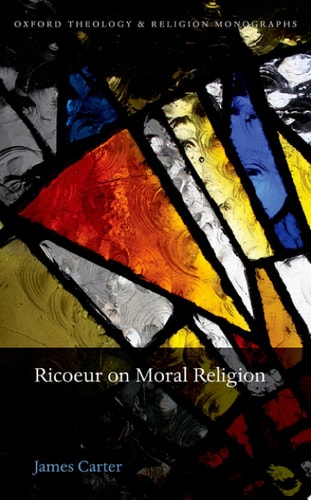
Ricoeur on Moral Religion
0
0
As an Amazon Associate and affiliate partner, Menrva Books earns from qualifying purchases. Learn more
Author Description
In Ricoeur on Moral Religion, James Carter argues that Paul Ricoeur's later philosophical writings provide a highly instructive interpretive key with which to assess his philosophical project as a whole. This first systematic study of the "later Ricoeur" offers a critical yet sympathetic reconstruction of Ricoeur's hermeneutics of ethical life, which demonstrates his significant contribution to contemporary philosophy of religion and moral philosophy. What emerges is a clear and distinctive moral religion that binds humans together universally on the basis of the life they share as capable beings. Carter also uncovers a hitherto unforeseen thread in Ricoeur's writings concerning ethical life, pulled through his own readings of Spinoza, Aristotle, and Kant. Ricoeur's hermeneutics is structured by a Kantian architectonic informed at different levels by these three philosophers, who ground a rich, holistic, and ultimately rationalist account of ethical life and religion that resists the trappings of both positivism and postmodernism.
Menrva's Summary
THE THESIS
This book investigates whether Paul Ricoeur's later philosophical writings offer a coherent interpretive key to understanding his entire philosophical project. James Carter, an academic scholar, utilizes a systematic reconstruction of Ricoeur's hermeneutics to argue that the philosopher developed a distinct moral religion. By analyzing Ricoeur's engagement with Spinoza, Aristotle, and Kant, Carter demonstrates how these influences ground a rationalist account of ethical life that avoids the limitations of both positivism and postmodernism.
THE SCOPE MAP
What You Will Find
- A systematic analysis of the later philosophical works of Paul Ricoeur.
- An examination of the Kantian architectonic within Ricoeur's hermeneutics.
- A comparative study of Ricoeur's interpretation of Spinoza, Aristotle, and Kant.
- A framework for understanding moral religion as a universal bond for capable beings.
THE AUTHORITY PERSPECTIVE
Scholars and students of continental philosophy view this monograph as a foundational text for understanding the evolution of Ricoeur's thought. Readers frequently note the academic density of the prose, which is intended for those already familiar with the primary philosophical traditions discussed.
Page Count:
192
Publication Date:
2014-10-14
Publisher:
Oxford University Press
ISBN-10:
0198717156
ISBN-13:
9780198717157
Philosophy
Religion
Theology
Academic
Ethics
Community Tags
Similar Books