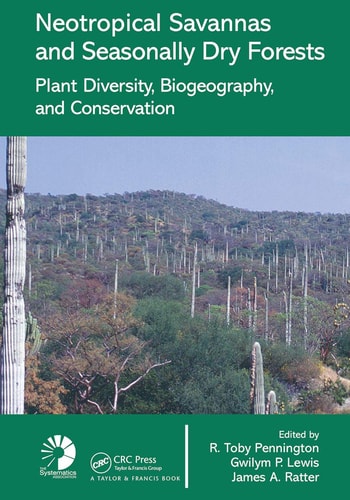
Neotropical Savannas and Seasonally Dry Forests: Plant Diversity, Biogeography, and Conservation
0
0
As an Amazon Associate and affiliate partner, Menrva Books earns from qualifying purchases. Learn more
Author Description
More often than not, when people think of a neotropical forest, what comes to mind is a rain forest, rather than a dry forest. Just as typically, when they imagine a savanna, they visualize the African plains, rather than those dry woodlands and grasslands found in the Neotropics. These same preconceptions can be found among scientists, as these neotropical biomes receive nowhere near the attention they should - in terms of both research and conservation -considering the amount of land they encompass and the diversity of vegetation they contain. Neotropical Savannas and Dry Forests: Plant Diversity, Biogeography, and Conservation provides an engaging synthesis of information on the plant diversity and geography, as well as the conservation status, of these species-rich areas. This impressive compilation is the result of a plant diversity symposium that took place during an international conference on tropical savannas and seasonally dry forests held in 2003. Fifty leading scientists, representing a variety of disciplines have contributed to the chapters of this book in an effort to address three questions: What are the patterns of diversity, species-richness and endemism of the floras of neotropical seasonally dry forest and savannas? How and why did this endemism and diversity arise? Are these ecosystems adequately protected and, if not, which areas should be elevated into priorities for conservation, and how can this be best achieved? This work is the first extensive compilation of the patterns of plant biodiversity in these neotropical ecosystems. The overview also provides a summary of what is known of their evolutionary history, including an examination of the links to the development of analogous vegetation in Africa. In contrast to previously published titles that emphasize ecology and physiology, this work focuses on plant biodiversity and reviews molecular phylogenetic and molecular population genetic approache
Menrva's Summary
THE THESIS
This book investigates the understudied plant diversity, biogeography, and conservation status of neotropical savannas and seasonally dry forests. It addresses the common misconception that neotropical forests are solely rainforests and that savannas are exclusive to Africa, highlighting the significant land area and vegetation diversity these biomes represent. The work synthesizes information from a 2003 symposium, with contributions from fifty leading scientists, to explore patterns of diversity, species-richness, and endemism, their evolutionary origins, and the adequacy of current conservation efforts.
THE SCOPE MAP
- What are the patterns of diversity, species-richness and endemism of the floras of neotropical seasonally dry forest and savannas?
- How and why did this endemism and diversity arise?
- Are these ecosystems adequately protected and, if not, which areas should be elevated into priorities for conservation, and how can this be best achieved?
- Provides the first extensive compilation of plant biodiversity patterns in these neotropical ecosystems.
- Summarizes the evolutionary history of these ecosystems, including links to analogous vegetation in Africa.
- Reviews molecular phylogenetic and molecular population genetic approaches.
THE AUTHORITY PERSPECTIVE
This compilation, stemming from a 2003 international conference, offers a comprehensive overview of neotropical savannas and dry forests, focusing on plant biodiversity and evolutionary history. The work addresses critical questions regarding diversity patterns, origins of endemism, and conservation priorities, filling a gap in existing literature that often emphasizes ecology and physiology. By bringing together fifty leading scientists, the book provides a synthesis of current knowledge and highlights the need for increased research and conservation efforts in these vital biomes. The focus on molecular approaches offers a modern perspective on understanding these ecosystems.
Page Count:
508
Publication Date:
2019-12-18
Publisher:
Taylor & Francis Group
ISBN-10:
0367453584
ISBN-13:
9780367453589
Science
Non-Fiction
Conservation
Ecology
Botany
Biogeography
Community Tags
Similar Books