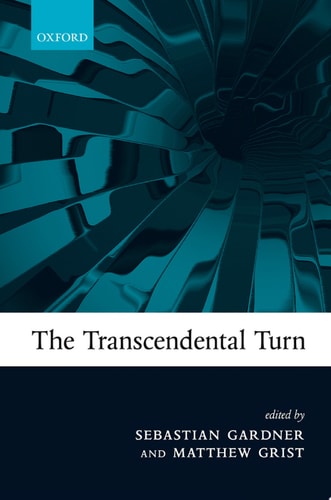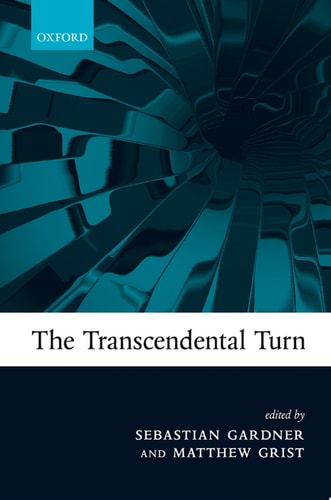
The Transcendental Turn
0
0
As an Amazon Associate and affiliate partner, Menrva Books earns from qualifying purchases. Learn more
Author Description
Kant's influence on the history of philosophy is vast and protean. The transcendental turn denotes one of its most important forms, defined by the notion that Kant's deepest insight should not be identified with any specific epistemological or metaphysical doctrine, but rather concerns the fundamental standpoint and terms of reference of philosophical enquiry. To take the transcendental turn is not to endorse any of Kant's specific teachings, but to accept that the Copernican revolution announced in the Preface of the Critique of Pure Reason sets philosophy on a new footing and constitutes the proper starting point of philosophical reflection.The aim of this volume is to map the historical trajectory of transcendental philosophy and the major forms that it has taken. The contributions, from leading contemporary scholars, focus on the question of what the transcendental turn consists in--its motivation, justification, and implications; and the limitations and problems which it arguably confronts--with reference to the relevant major figures in modern philosophy, including Kant, Fichte, Hegel, Nietzsche, Husserl, Heidegger, Merleau-Ponty, and Wittgenstein. Central themes and topics discussed include the distinction of realism from idealism, the relation of transcendental to absolute idealism, the question of how transcendental conclusions stand in relation to (and whether they can be made compatible with) naturalism, the application of transcendental thought to foundational issues in ethics, and the problematic relation of phenomenology to transcendental enquiry.
Menrva's Summary
THE THESIS
This volume investigates the nature and historical trajectory of the transcendental turn, questioning what constitutes the proper starting point of philosophical reflection in the wake of Kant's Copernican revolution. Matthew Grist and Sebastian Gardner curate a collection of essays from leading scholars to examine the motivation, justification, and implications of transcendental philosophy. The text evaluates how this philosophical standpoint persists across modern thought, moving beyond specific Kantian doctrines to address the foundational terms of reference for inquiry.
THE SCOPE MAP
What You Will Find
- Historical analysis of transcendental philosophy from Kant through the 20th century.
- Comparative studies of major figures including Fichte, Hegel, Nietzsche, Husserl, Heidegger, Merleau-Ponty, and Wittgenstein.
- Theoretical frameworks addressing the distinction between realism and idealism.
- Methodological discussions on the compatibility of transcendental conclusions with naturalism and ethics.
THE AUTHORITY PERSPECTIVE
Experts identify this collection as a rigorous examination of the transcendental tradition that bridges the gap between classical German idealism and contemporary phenomenology. Readers frequently note the academic density of the prose, which is intended for advanced students and professional philosophers engaged in foundational metaphysical research.
Page Count:
384
Publication Date:
2015-04-26
Publisher:
Oxford University Press
ISBN-10:
019872487X
ISBN-13:
9780198724872
Philosophy
Metaphysics
Epistemology
Phenomenology