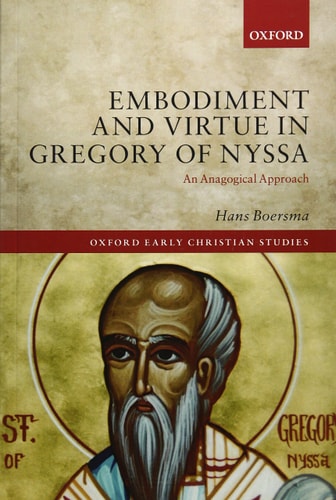
Embodiment and Virtue in Gregory of Nyssa: An Anagogical Approach
0
0
As an Amazon Associate and affiliate partner, Menrva Books earns from qualifying purchases. Learn more
Author Description
Embodiment in the theology of Gregory of Nyssa is a much-debated topic. Hans Boersma argues that this-worldly realities of time and space, which include embodiment, are not the focus of Gregory's theology. Instead, embodiment plays a distinctly subordinate role. The key to his theology, Boersma suggests, is anagogy, going upward in order to participate in the life of God.This book looks at a variety of topics connected to embodiment in Gregory's thought: time and space; allegory; gender, sexuality, and virginity; death and mourning; slavery, homelessness, and poverty; and the church as the body of Christ. In each instance, Boersma maintains, Gregory values embodiment only inasmuch as it enables us to go upward in the intellectual realm of the heavenly future.Boersma suggests that for Gregory embodiment and virtue serve the anagogical pursuit of otherworldly realities. Countering recent trends in scholarship that highlight Gregory's appreciation of the goodness of creation, this book argues that Gregory looks at embodiment as a means for human beings to grow in virtue and so to participate in the divine life.It is true that, as a Christian thinker, Gregory regards the creator-creature distinction as basic. But he also works with the distinction between spirit and matter. And Nyssen is convinced that in the hereafter the categories of time and space will disappear-while the human body will undergo an inconceivable transformation. This book, then, serves as a reminder of the profoundly otherworldly cast of Gregory's theology.
Menrva's Summary
THE THESIS
This book investigates the role of embodiment and virtue in the theological framework of Gregory of Nyssa, specifically questioning whether his work prioritizes earthly existence or anagogical ascent. Hans Boersma, a scholar of historical theology, examines Gregory's writings to argue that material realities are subordinate to the pursuit of divine participation. By analyzing Gregory's treatment of time, space, and human experience, Boersma challenges contemporary interpretations that emphasize a positive valuation of creation in Nyssen's thought. The text posits that for Gregory, the physical world serves primarily as a vehicle for the soul's upward movement toward the divine.
THE SCOPE MAP
What You Will Find
- Analysis of Gregory of Nyssa's treatment of time, space, and material existence.
- Examination of social and personal themes including gender, sexuality, slavery, and poverty.
- A critical evaluation of the 'anagogical' methodology in early Christian theology.
- Comparative study of the creator-creature distinction versus the spirit-matter dichotomy.
THE AUTHORITY PERSPECTIVE
Scholars recognize this work as a significant contribution to the study of patristic theology and the specific nuances of Gregory of Nyssa's worldview. Readers frequently note the academic density of the prose, which is intended for those familiar with early Christian studies and metaphysical discourse.
Page Count:
304
Publication Date:
2015-04-26
Publisher:
Oxford University Press
ISBN-10:
0198728239
ISBN-13:
9780198728238
History
Philosophy
Theology
Religious Aspects
Academic
Christianity
Community Tags
Other Editions(2)
Similar Books