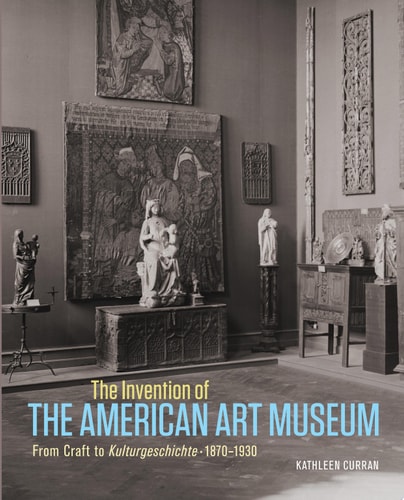
The Invention of the American Art Museum: From Craft to Kulturgeschichte, 1870–1930
0
0
As an Amazon Associate and affiliate partner, Menrva Books earns from qualifying purchases. Learn more
Author Description
American art museums share a mission and format that differ from those of their European counterparts, which often have origins in aristocratic collections. This groundbreaking work recounts the fascinating story of the invention of the modern American art museum, starting with its roots in the 1870s in the craft museum type, which was based on London’s South Kensington (now the Victoria and Albert) Museum. At the turn of the twentieth century, American planners grew enthusiastic about a new type of museum and presentation that was developed in Northern Europe, particularly in Germany, Switzerland, and Scandinavia. Called Kulturgeschichte (cultural history) museums, they were evocative displays of regional history. American trustees, museum directors, and curators found that the Kulturgeschichte approach offered a variety of transformational options in planning museums, classifying and displaying objects, and broadening collecting categories, including American art and the decorative arts. Leading institutions, including the Museum of Fine Arts, Boston, and the Metropolitan Museum of Art in New York, adopted and developed crucial aspects of the Kulturgeschichte model. By the 1930s, such museum plans and exhibition techniques had become standard practice at museums across the country.
Menrva's Summary
THE THESIS
This book traces the invention and evolution of the American art museum from its craft-based origins to its adoption of the Kulturgeschichte model. It details how American institutions, beginning in the 1870s and influenced by London's South Kensington Museum, gradually transformed their mission and format. The narrative highlights the pivotal shift around the turn of the twentieth century, when American museum leaders embraced the Kulturgeschichte approach developed in Northern Europe, which emphasized regional history and evocative displays. This adoption allowed for significant developments in museum planning, object classification, exhibition techniques, and the expansion of collecting categories, ultimately shaping the standard practices of American museums by the 1930s.
THE SCOPE MAP
- The origins of American art museums in the craft museum type, inspired by London's South Kensington Museum.
- The influence of European Kulturgeschichte (cultural history) museums, particularly from Germany, Switzerland, and Scandinavia.
- The adoption and adaptation of the Kulturgeschichte model by leading American institutions like the Museum of Fine Arts, Boston, and the Metropolitan Museum of Art.
- Key transformations in museum planning, object classification, and exhibition techniques.
- The broadening of collecting categories to include American art and decorative arts.
- The establishment of standard museum practices across the United States by the 1930s.
THE AUTHORITY PERSPECTIVE
The book is recognized for its detailed account of the development of the American art museum, charting its transformation from craft-focused institutions to those embracing cultural history. It highlights the significant influence of European museum models, particularly the German Kulturgeschichte approach, on American museum practices. The work is noted for its examination of how leading institutions adopted and adapted these models, ultimately shaping the landscape of American museums by the mid-twentieth century. This scholarly approach provides valuable insight into the historical forces that defined the American art museum.
Page Count:
256
Publication Date:
2016-07-01
Publisher:
Getty Publications
ISBN-10:
1606064789
ISBN-13:
9781606064788
History
Non-Fiction
Cultural History
Museum Studies
American Studies
Art History