The Porous Museum: The Politics of Art, Rupture and Recycling in Modern Romania
0
0
As an Amazon Associate and affiliate partner, Menrva Books earns from qualifying purchases. Learn more
Author Description
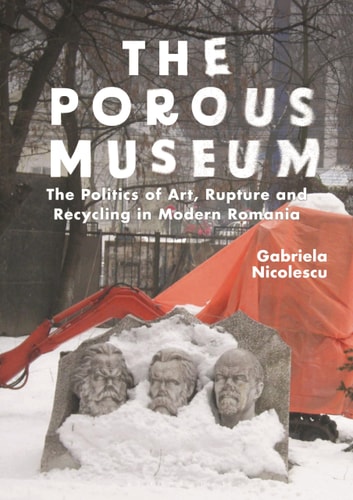
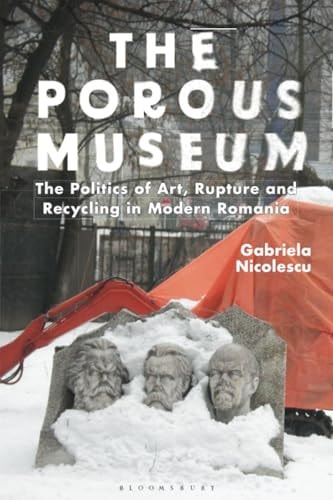
The Porous Museum examines questions of museum practice, aesthetics and politics through a focused study of The National Museum of the Romanian Peasant in Bucharest. The museum has functioned successively as a museum of art, a communist museum, the headquarters of the communist secret police, and a museum of folk art. Gabriela Nicolescu traces the museum's spectacular biography and follows the transformation of its practices and aesthetics through three very different political regimes in the 20th and early 21st century: monarchist, socialist and post-socialist. Nicolescu's fascinating study starts with a focus on a dumped and smashed statue of the revolutionary figureheads Marx, Engels and Lenin in the museum's rear yard as an expression of the complicated journey of modern Romania. She considers questions of recycling and rupture, with some exhibits and practices carried over from one regime to another, whilst others have been discarded in favour of the completely new. Through this process, the museum can been seen as a microcosm of the wider nation state and the ways in which the past is remembered or rejected. The interdependency of politics, ethics and aesthetics that Nicolescu terms 'porosity' is an attribute of museums all over the world. Applying original anthropological research to key ethnographic museums in Romania and elsewhere in Europe, the book moves beyond regional and media stereotypes by arguing for the influence of local oral histories on national history.
Menrva's Summary
THE THESIS
The Porous Museum investigates the complex political and aesthetic transformations of The National Museum of the Romanian Peasant in Bucharest. The book traces the museum's biography through monarchist, socialist, and post-socialist regimes, examining how its practices and exhibits were recycled or discarded. It uses the museum as a microcosm of Romania's struggle with its past, exploring the 'porosity' between politics, ethics, and aesthetics. The study is grounded in original anthropological research and considers the influence of local oral histories on national narratives.
THE SCOPE MAP
- Analysis of The National Museum of the Romanian Peasant, Bucharest.
- Examination of museum practices and aesthetics across three political regimes (monarchist, socialist, post-socialist).
- Focus on the concepts of 'recycling' and 'rupture' in cultural heritage.
- Exploration of the 'porosity' between politics, ethics, and aesthetics in museums.
- Application of original anthropological research to ethnographic museums in Romania and Europe.
- Discussion of the influence of local oral histories on national history.
- Case study of a dumped statue of Marx, Engels, and Lenin as a symbol of Romania's past.
THE AUTHORITY PERSPECTIVE
The book offers a detailed examination of museum practices and their entanglement with political shifts, using the Romanian National Museum of Peasant as a central case study. It highlights the concepts of 'recycling' and 'rupture' in how societies engage with their past, suggesting that museums act as microcosms of national memory. The author's use of original anthropological research and focus on oral histories aims to provide a nuanced perspective beyond regional stereotypes. The work is positioned as a significant contribution to museum studies and cultural history, particularly concerning post-socialist contexts.
Page Count:
224
Publication Date:
2025-01-23
Publisher:
Bloomsbury Academic
ISBN-10:
1350400084
ISBN-13:
9781350400085
History
Non-Fiction
Anthropology
Museum Studies
Art History
Cultural History