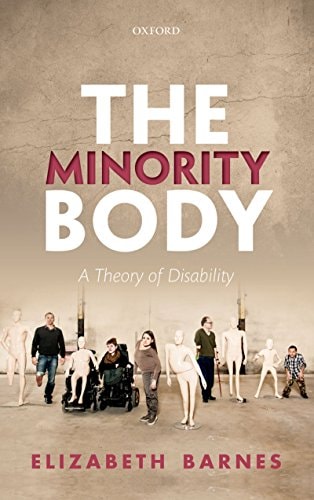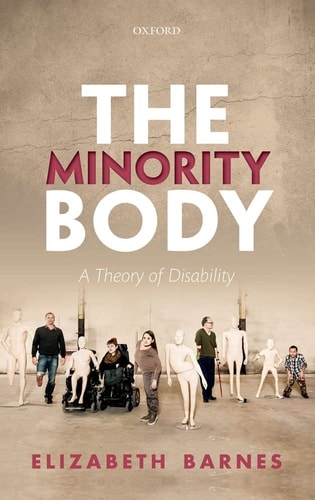
The Minority Body: A Theory of Disability
0
0
As an Amazon Associate and affiliate partner, Menrva Books earns from qualifying purchases. Learn more
Author Description
Elizabeth Barnes argues compellingly that disability is primarily a social phenomenon--a way of being a minority, a way of facing social oppression, but not a way of being inherently or intrinsically worse off. This is how disability is understood in the Disability Rights and Disability Pride movements; but there is a massive disconnect with the way disability is typically viewed within analytic philosophy. The idea that disability is not inherently bad or sub-optimal is one that many philosophers treat with open skepticism, and sometimes even with scorn. The goal of this book is to articulate and defend a version of the view of disability that is common in the Disability Rights movement. Elizabeth Barnes argues that to be physically disabled is not to have a defective body, but simply to have a minority body.
Menrva's Summary
THE THESIS
This book investigates the core question of whether disability is an inherently negative state or a neutral variation of human existence. Prof. Elizabeth Barnes, a philosopher specializing in metaphysics and disability studies, challenges the prevailing view within analytic philosophy that disability is a biological defect. By aligning philosophical inquiry with the principles of the Disability Rights and Disability Pride movements, Barnes constructs a rigorous argument that disability should be understood as a social phenomenon and a minority identity rather than a medical or personal deficit.
THE SCOPE MAP
What You Will Find
- A critical analysis of the 'medical model' versus the 'social model' of disability.
- Philosophical arguments regarding the nature of well-being and the value of human bodies.
- Engagement with analytic philosophy literature concerning health, impairment, and quality of life.
- A defense of the 'minority body' framework as a legitimate ontological category.
THE AUTHORITY PERSPECTIVE
Scholars and philosophers frequently cite this work as a vital bridge between disability activism and academic analytic philosophy. Experts highlight the text for its clarity and its success in challenging long-standing biases within the philosophical canon.
Page Count:
160
Publication Date:
2016-06-01
Publisher:
Oxford University Press
ISBN-10:
0198732589
ISBN-13:
9780198732587
Philosophy
Social Theory
People with Disabilities
Feminist Philosophy
Feminist Theory
Ethics
Sociology of disability