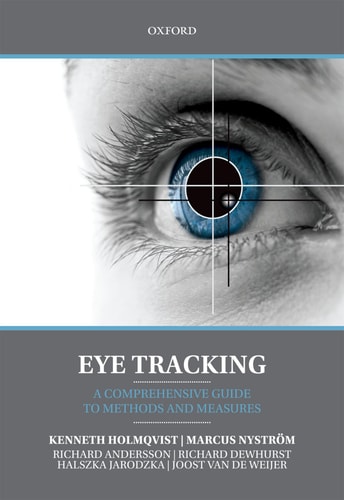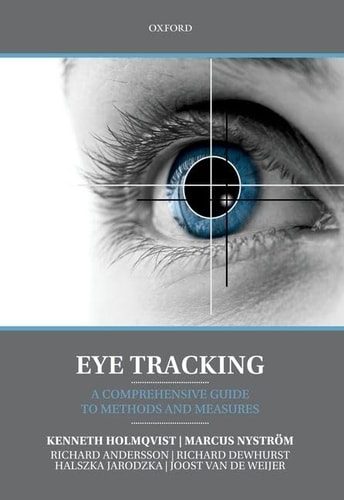
Eye Tracking: A Comprehensive Guide to Methods and Measures
0
0
As an Amazon Associate and affiliate partner, Menrva Books earns from qualifying purchases. Learn more
Author Description
We make 3-5 eye movements per second, and these movements are crucial in helping us deal with the vast amounts of information we encounter in our everyday lives. In recent years, thanks to the development of eye tracking technology, there has been a growing interest in monitoring and measuring these movements, with a view to understanding how we attend to and process the visual information we encounter.Eye tracking as a research tool is now more accessible than ever, and is growing in popularity amongst researchers from a whole host of different disciplines. Usability analysts, sports scientists, cognitive psychologists, reading researchers, psycholinguists, neurophysiologists, electrical engineers, and others, all have a vested interest in eye tracking for different reasons. The ability to record eye-movements has helped advance our science and led to technological innovations. However, the growth of eye tracking in recent years has also presented a variety of challenges - in particular the issue of how to design an eye-tracking experiment, and how to analyse the data.This book is a much needed comprehensive handbook of eye tracking methodology. It describes how to evaluate and acquire an eye-tracker, how to plan and design an eye tracking study, and how to record and analyse eye-movement data. Besides technical details and theory, the heart of this book revolves around practicality - how raw data samples are converted into fixations and saccades using event detection algorithms, how the different representations of eye movement data are calculated using AOIs, heat maps and scanpaths, and how all the measures of eye movements relate to these processes.Part I presents the technology and skills needed to perform high-quality research with eye-trackers.Part II covers the predominant methods applied to the data which eye-trackers record. These include the parsing of raw sample data into oculomotor events, and how to calculate other representations of eye movements such
Menrva's Summary
THE THESIS
How can researchers effectively design, execute, and analyze eye-tracking experiments to better understand human visual information processing? Kenneth Holmqvist provides a comprehensive technical handbook for scholars and practitioners across diverse fields, including cognitive psychology, usability analysis, and neurophysiology. The text synthesizes theoretical foundations with practical methodologies, offering a structured approach to navigating the complexities of eye-movement data acquisition and interpretation.
THE SCOPE MAP
What You Will Find
- Technical criteria for evaluating and selecting eye-tracking hardware.
- Methodologies for planning and designing rigorous experimental studies.
- Algorithms for converting raw data samples into fixations and saccades.
- Analytical frameworks for utilizing AOIs, heat maps, and scanpaths to interpret visual attention.
THE AUTHORITY PERSPECTIVE
Experts recognize this work as a foundational, highly technical resource for those entering the field of eye-tracking research. Readers frequently note the density of the prose, which serves as a rigorous reference manual for both academic researchers and industry professionals.
Page Count:
560
Publication Date:
2015-05-12
Publisher:
Oxford University Press
ISBN-10:
0198738595
ISBN-13:
9780198738596
Science
Psychology
Technology
Research Methods
Eye Movements
Neuroscience
Community Tags
Similar Books