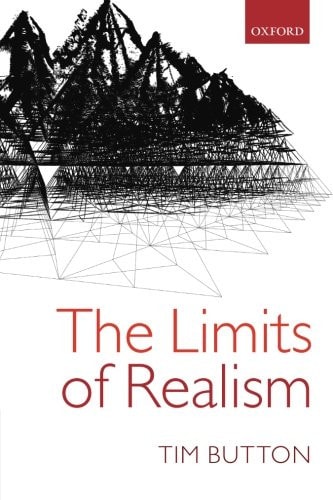
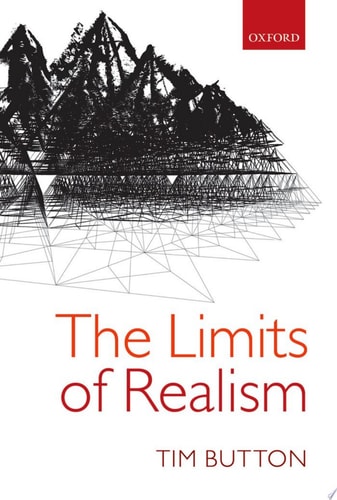
The Limits of Realism
0
0
As an Amazon Associate and affiliate partner, Menrva Books earns from qualifying purchases. Learn more
Author Description
Tim Button explores the relationship between words and world; between semantics and scepticism.A certain kind of philosopher--the external realist--worries that appearances might be radically deceptive; we might all, for example, be brains in vats, stimulated by an infernal machine. But anyone who entertains the possibility of radical deception must also entertain a further worry: that all of our thoughts are totally contentless. That worry is just incoherent.We cannot, then, be external realists, who worry about the possibility of radical deception. Equally, though, we cannot be internal realists, who reject all possibility of deception. We must position ourselves somewhere between internal realism and external realism, but we cannot hope to say exactly where. We must be realists, for what that is worth, and realists within limits.In establishing these claims, Button critically explores and develops several themes from Hilary Putnam's work: the model-theoretic arguments; the connection between truth and justification; the brain-in-vat argument; semantic externalism; and conceptual relativity. The Limits of Realism establishes the continued significance of these topics for all philosophers interested in mind, logic, language, or the possibility of metaphysics.
Menrva's Summary
THE THESIS
This book investigates the logical and semantic boundaries of realism by examining the tension between external and internal perspectives on truth and deception. Tim Button, a philosopher specializing in logic and language, builds upon the work of Hilary Putnam to argue that neither radical external realism nor total internal realism is coherent. He proposes a middle-ground position, suggesting that while we must remain realists, our realism is inherently constrained by the limits of what we can meaningfully express about the relationship between our thoughts and the world.
THE SCOPE MAP
What You Will Find
- Analysis of the model-theoretic arguments regarding truth and reference.
- Examination of the brain-in-vat thought experiment and its implications for skepticism.
- Exploration of semantic externalism and conceptual relativity.
- Critical evaluation of the connection between justification and truth.
THE AUTHORITY PERSPECTIVE
Experts recognize this work as a rigorous engagement with the legacy of Hilary Putnam, particularly regarding the philosophy of language and mind. Readers frequently note the technical density of the prose, which makes it a challenging but significant resource for advanced students and professional philosophers.
Page Count:
240
Publication Date:
2015-08-01
Publisher:
Oxford University Press
ISBN-10:
0198744129
ISBN-13:
9780198744122
Philosophy
Epistemology
Logic
Metaphysics
Realism
Language
Community Tags
Other Editions(3)
Similar Books