The Rules of Thought
0
0
As an Amazon Associate and affiliate partner, Menrva Books earns from qualifying purchases. Learn more
Author Description
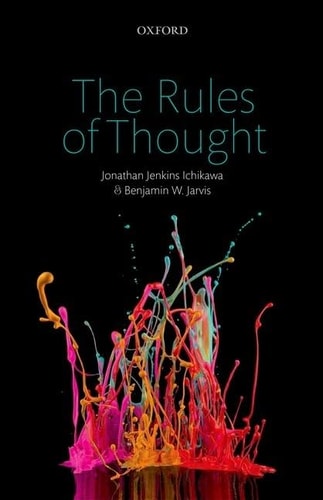
The Rules of Thought develops a rationalist theory of mental content while defending a traditional epistemology of philosophy. Jonathan Jenkins Ichikawa and Benjamin W. Jarvis contend that a capacity for pure rational thought is fundamental to mental content itself and underwrites our quotidian reasoning and extraordinary philosophical engagement alike. Part I of the book develops a Fregean theory of mental content, according to which rational relations between propositions play a central role in individuating contents; the theory is designed to be sensitive not only to Frege's puzzle and other data that have motivated rationalist conceptions of content, but also to considerations in the philosophy of mind and language that have motivated neo-Russellian views. Part II articulates a theory of the a priori, and shows that, given the framework of Part I, it is very plausible that much philosophical work of interest is genuinely a priori. Notably, it is no part of the picture developed that intuitions have an important role to play, either in mental content, or in the epistemology of the a priori; Part III defends this departure from rationalist orthodoxy.
Menrva's Summary
THE THESIS
This book investigates the nature of mental content and the epistemology of philosophy by proposing a rationalist theory that centers on the capacity for pure rational thought. Benjamin W. Jarvis and Jonathan Jenkins Ichikawa utilize a framework that bridges traditional rationalist epistemology with contemporary concerns in the philosophy of mind and language. They argue that rational relations between propositions are essential for individuating mental content, ultimately defending the view that significant philosophical work is conducted a priori without relying on the traditional role of intuition.
THE SCOPE MAP
What You Will Find
- A Fregean theory of mental content that addresses both classical puzzles and neo-Russellian perspectives.
- An articulated framework for understanding the a priori nature of philosophical inquiry.
- A critical defense of rationalism that explicitly rejects the necessity of intuition in mental content.
- An analysis of how rational thought underwrites both everyday reasoning and complex philosophical engagement.
THE AUTHORITY PERSPECTIVE
Experts in the field recognize this work as a significant contribution to contemporary rationalist discourse, particularly for its rigorous departure from intuition-based epistemology. Readers frequently note the academic density of the prose, which requires a strong background in analytic philosophy to fully engage with the authors' arguments.
Page Count:
368
Publication Date:
2016-05-24
Publisher:
Oxford University Press
ISBN-10:
0198748183
ISBN-13:
9780198748182
Philosophy
Rationalism
Epistemology
Knowledge Theory