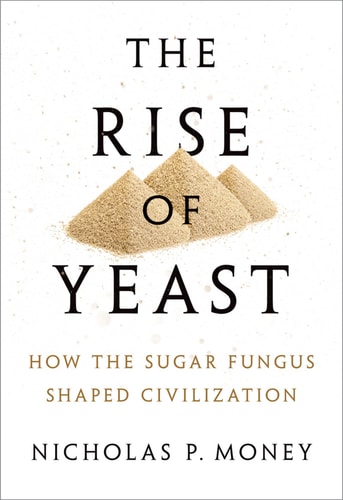
The Rise of Yeast: How the Sugar Fungus Shaped Civilisation
0
0
As an Amazon Associate and affiliate partner, Menrva Books earns from qualifying purchases. Learn more
Author Description
From breakfast toast to evening wine, yeast is the microscopic thing that we cannot live without. We knew what yeast did as an invisible brewer and baker long before we had a clue about the existence of microorganisms. Ten thousand years ago, our ancestors abandoned bush meat and wild fruit in favor of farming animals and cultivating grain. Leaving the forests and grasslands, our desire for beer and wine produced by the fungus was a major stimulus for agricultural settlement. It takes a village to run a brewery or tend a vineyard. We domesticated wild yeast and yeast domesticated us. With the inevitable escape of the fungus from beer vats into bread dough, our marriage with yeast was secured by an appetite for fresh loaves of leavened bread.Over the millennia, we have adapted the technologies of brewing, winemaking, and baking and have come to rely on yeast more and more. Yeast produces corn ethanol and other biofuels and has become the genetically-modified darling of the pharmaceutical business as a source of human insulin and a range of life-saving medicines. These practical uses of yeast have been made possible by advances in our understanding of its biology, and the power of genetic engineering has been used to modify the fungus to do just about anything we wish. We know more about yeast than any other organism built from complex cells like our own. To understand yeast is to understand life. In this book Nicholas P. Money offers a celebration of our favorite microorganism.
Menrva's Summary
THE THESIS
This book investigates the profound historical and biological influence of yeast on the development of human civilization and modern technology. Nicholas P. Money, a mycologist and professor, utilizes his expertise in fungal biology to trace the symbiotic relationship between humans and Saccharomyces cerevisiae. He argues that the human transition to agricultural settlement was driven as much by the desire for fermented beverages as by the need for stable food sources. The text examines how this microscopic organism evolved from a wild fungus into a cornerstone of industrial, pharmaceutical, and culinary advancement.
THE SCOPE MAP
What You Will Find
- Historical analysis of the transition from hunter-gatherer societies to agricultural settlements driven by brewing and winemaking.
- Biological overview of yeast as a model organism for understanding complex cellular life.
- Examination of the role of yeast in modern biotechnology, including biofuel production and pharmaceutical manufacturing.
- Discussion of genetic engineering techniques used to modify yeast for diverse industrial applications.
THE AUTHORITY PERSPECTIVE
Experts and readers alike appreciate the accessible prose that translates complex mycological concepts into a narrative of human history. The book is frequently cited as a clear, engaging introduction to the intersection of microbiology and cultural development.
Page Count:
224
Publication Date:
2018-04-22
Publisher:
Oxford University Press
ISBN-10:
0198749708
ISBN-13:
9780198749707
History
Science
Agriculture
Microorganisms
Biology
Yeast
Microbiology
Food Science
Community Tags
Similar Books