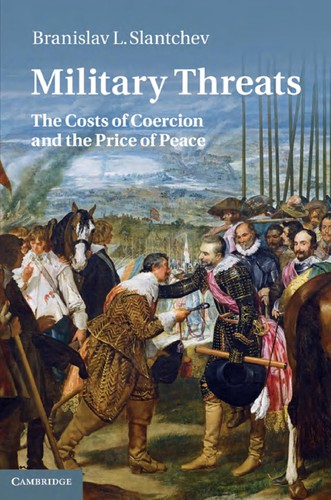
Military Threats
0
0
As an Amazon Associate and affiliate partner, Menrva Books earns from qualifying purchases. Learn more
Author Description
Is military power central in determining which states get their voice heard? Must states run a high risk of war to communicate credible intent? The author shows that states can often obtain concessions without incurring higher risks when they use military threats. Unlike diplomatic forms of communication, physical military moves improve a state's expected performance in war. If the opponent believes the threat, it will be more likely to back down. Military moves are also inherently costly, so only resolved states are willing to pay these costs. The author argues that powerful states can secure better peaceful outcomes and lower the risk of war, but the likelihood of war depends on the extent to which a state is prepared to use military threats to deter challenges to peace and compel concessions without fighting. The price of peace may therefore be large: states invest in military forces that are both costly and unused.
Menrva's Summary
THE THESIS
This book investigates whether military power is the primary determinant of a state's influence in international affairs and if high risks of war are necessary to credibly communicate intent. The author, Branislav L. Slantchev, argues that states can achieve concessions without escalating to war by employing military threats. Unlike diplomatic overtures, military deployments enhance a state's potential wartime performance, making opponents more inclined to concede if they believe the threat. The inherent costs of military moves signal a state's resolve, suggesting that powerful states can secure favorable peaceful outcomes and reduce war likelihood by effectively using threats to deter challenges and compel concessions.
THE SCOPE MAP
- Analysis of how military threats function as a form of communication in international relations.
- Exploration of the relationship between military moves, risk of war, and the attainment of concessions.
- Examination of the role of resolve and costliness in signaling state intentions through military posturing.
- Discussion on how powerful states can leverage military threats to achieve peaceful outcomes and lower war probability.
- Investigation into the paradox of investing in costly, unused military forces as a means to maintain peace.
- Case studies or theoretical frameworks illustrating the strategic use of military threats.
THE AUTHORITY PERSPECTIVE
The book is regarded as a significant contribution to the study of international security and strategic communication. Scholars likely find its theoretical framework rigorous and its analysis of military threats insightful for understanding state behavior. The author's argument that military moves can de-escalate rather than escalate conflict challenges conventional wisdom, offering a nuanced perspective on the price of peace. The work is expected to be a key text for those studying international relations, political science, and military strategy.
Page Count:
313
Publication Date:
2011-01-01
ISBN-10:
0521763185
ISBN-13:
9780521763189
Politics
History
Non-Fiction
Military Strategy
Diplomacy
International relations
Community Tags
Similar Books