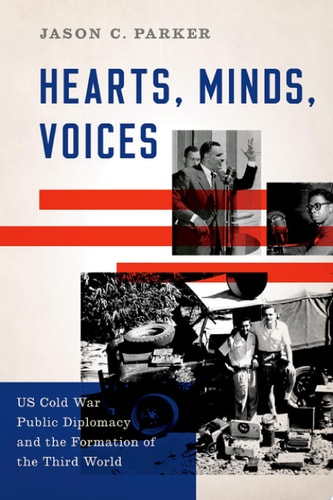
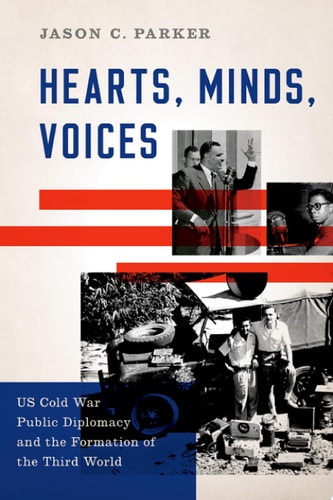
Hearts, Minds, Voices: US Cold War Public Diplomacy and the Formation of the Third World
0
0
As an Amazon Associate and affiliate partner, Menrva Books earns from qualifying purchases. Learn more
Author Description
The Cold War superpowers endeavored mightily to "win hearts and minds" abroad through what came to be called public diplomacy. While many target audiences were on the conflict's original front-lines in Europe, the vast majority resided in areas in the throes of decolonization and experienced the Cold War as public diplomacy- as a media war for their allegiance rather than as violence. In these areas, superpower public diplomacy encountered volatile issues of race, empire, poverty, and decolonization-which intersected with the dynamics of the Cold War and with anti-imperialist currents. The challenge to US public diplomacy was acute. Jim Crow and Washington's European-imperial alliances were inseparable from the image of the United States and put American outreach unavoidably on the defensive. Newly independent voices in the non-European world responded to this media war by launching public-diplomacy campaigns of their own. In addition to validating the strategic importance of public diplomacy, they articulated a different vision of the postwar world. Rejecting the superpowers' Cold War, they forged the "Third World project" around nonalignment, post-imperial economic development, and anti-colonial racial solidarity. In doing so, Jason C. Parker argues, the United States inadvertently helped to nurture the "Third World" as a transnational imagined community on the postwar global landscape.Tracing US public diplomacy during the early years of the Cold War, Hearts, Minds, Voices narrates how US foreign policy engaged with and impacted the Global South and international history more broadly.
Menrva's Summary
THE THESIS
How did the United States' efforts to influence global public opinion during the early Cold War inadvertently facilitate the creation of a unified Third World identity? Jason C. Parker, a historian specializing in international relations, examines the intersection of American public diplomacy with the realities of decolonization in the Global South. He argues that the US media war, constrained by domestic racial tensions and imperial alliances, failed to secure allegiance and instead provided the catalyst for newly independent nations to articulate their own transnational vision of nonalignment and anti-colonial solidarity.
THE SCOPE MAP
What You Will Find
- Analysis of US public diplomacy campaigns during the early Cold War era.
- Examination of the impact of Jim Crow and European-imperial alliances on American foreign policy credibility.
- Documentation of the rise of the Third World as a transnational imagined community.
Scope Limits
- The text focuses primarily on the early years of the Cold War rather than the entire duration of the conflict.
- The analysis centers on the interaction between US policy and the Global South, rather than a comprehensive history of all Cold War diplomatic theaters.
THE AUTHORITY PERSPECTIVE
Scholars and historians frequently cite this work for its nuanced exploration of how non-Western nations utilized public diplomacy to challenge superpower hegemony. Readers often note the academic rigor of the research and the author's ability to connect domestic American social issues with broader international geopolitical shifts.
Page Count:
254
Publication Date:
2016-01-01
Publisher:
Oxford University Press
ISBN-10:
0190251867
ISBN-13:
9780190251864
History
Developing Countries
American History
Cold War
United States
Race
Modern History
Decolonization
International relations
Diplomacy
Community Tags
Other Editions(2)
Similar Books