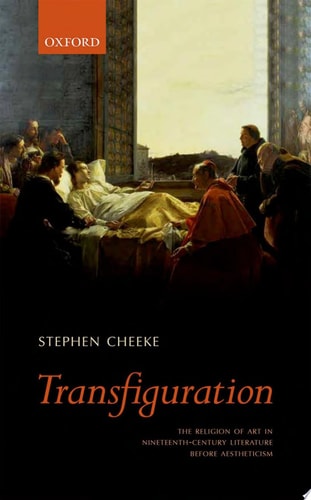
Transfiguration: The Religion of Art in Nineteenth-Century Literature (Before Aestheticism)
0
0
As an Amazon Associate and affiliate partner, Menrva Books earns from qualifying purchases. Learn more
Author Description
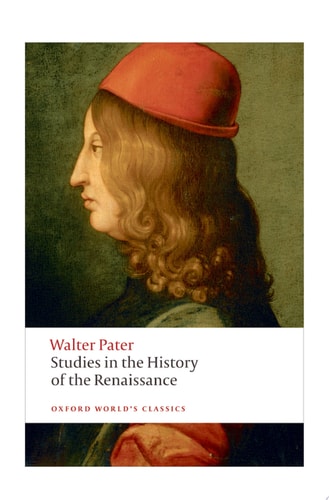
Transfiguration explores the work of John Ruskin, Robert Browning, Dante Gabriel Rossetti, and Walter Pater, treating in particular the ways in which they engaged with the Christian content of their subject, and, in Pater's case, how the art of Christianity was contrasted with classical sculpture. Stephen Cheeke examines two related phenomena: idolatry (a false substitution, a sexual betrayal), and the poetics of transfiguration (to elevate or glorify subject matter not thought of as conventionally poetic, to praise). Central to the book is the question of the "translation" of religion into art and aesthetics, a process which supposedly undergirds the advent of the museum age and makes possible the idea of a 'religion of art' as a phenomenon of late century Aestheticism. Such a phenomenon is prepared for, however, through the engagement with Christian painting and classical sculpture in the work of these four writers. All four thought carefully about the ways in which a particular mimetic impulse of 'making-live' in artworks could be connected to religious experience. This meant exploring the nature of the link between seeing and believing--visualising in order to conceive, to verify, but also in the sense of being acted upon by the visible. All four wrote about the great power of artworks to transfigure the objects of their attention. In each case, there emerges the possibility of a secret sexual knowledge hiding within, or lying on the other side of the sensuous knowledge of aesthesis. All four wondered whether this was inherently hostile to Christianity, or whether it may, finally, be an accommodation within it.
Menrva's Summary
THE THESIS
How did nineteenth-century writers translate religious experience into the secular framework of art and aesthetics? Stephen Cheeke, an expert in Victorian literature, investigates the intellectual shift where Christian iconography and classical sculpture were repurposed to form a 'religion of art.' By analyzing the works of Ruskin, Browning, Rossetti, and Pater, the author argues that the period's obsession with the 'making-live' quality of art created a new, complex relationship between visual perception and spiritual belief.
THE SCOPE MAP
What You Will Find
- Analysis of the transition from Christian religious content to the secular aestheticism of the late nineteenth century.
- Examination of the concepts of idolatry and the poetics of transfiguration in Victorian literature.
- Comparative study of how John Ruskin, Robert Browning, Dante Gabriel Rossetti, and Walter Pater interpreted the mimetic power of art.
- Exploration of the intersection between sensuous knowledge and hidden sexual subtexts within artistic observation.
THE AUTHORITY PERSPECTIVE
Scholars recognize this work as a rigorous examination of the theological underpinnings of Victorian aesthetic theory. Readers frequently note the academic density of the prose, which serves as a foundational text for those studying the intersection of nineteenth-century art history and literature.
Page Count:
288
Publication Date:
2016-11-17
Publisher:
Oxford University Press
ISBN-10:
0198757204
ISBN-13:
9780198757207
Religion
Literary Criticism
Nineteenth century
Art History
Aestheticism
Christianity and literature
British literature
Community Tags
Similar Books