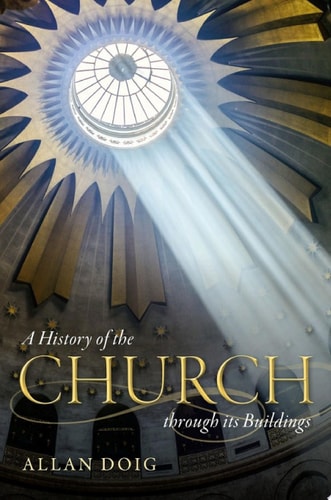
A History of the Church through its Buildings
0
0
As an Amazon Associate and affiliate partner, Menrva Books earns from qualifying purchases. Learn more
Author Description
The History of the Church through its Buildings takes the reader to meet people who lived through momentous religious changes in the very spaces where the story of the Church took shape. Buildings are about people, the people who conceived, designed, financed, and used them. Their stories become embedded in the very fabric itself, and as the fabric is changed through time in response to changing use, relationships, and beliefs, the architecture becomes the standing history of passing waves of humanity. This process takes on special significance in churches, where the arrangement of the space places members of the community in relationship with one another for the performance of the church's rites and ceremonies. Moreover, architectural forms and building materials can be used to establish relationships with other buildings in other places and other times. Coordinated systems of signs, symbols, and images proclaim beliefs and doctrine, and in a wider sense carry extended narratives of the people and their faith. Looking at the history of the church through its buildings allows us to establish a tangible connection to the lives of the people involved in some of the key moments and movements that shaped that history, and perhaps even a degree of intimacy with them. Standing in the same place where the worshippers of the past preached and taught, or in a space they built as a memorial, touching the stone they placed, or marking their final resting-place, holding a keepsake they treasured or seeing a relic they venerated, probably comes as close to a shared experience with these people as it is possible to come. Perhaps for a fleeting moment at such times their faces may come more clearly into focus…
Menrva's Summary
THE THESIS
How do the physical structures of churches serve as a tangible record of the evolving beliefs, social relationships, and historical movements of the Christian faith? Allan Doig, an expert in the history of art and architecture, argues that church buildings are not merely static monuments but dynamic repositories of human experience. By examining the design, financing, and functional changes of these spaces, the author demonstrates how architecture functions as a primary source for understanding the shifting theological and social priorities of the Church throughout history.
THE SCOPE MAP
What You Will Find
- Analysis of the relationship between architectural form and liturgical practice
- Examination of how building materials and symbols communicate religious doctrine
- Historical overview of church construction from early sites to later developments
Scope Limits
- Does not provide a comprehensive architectural survey of every major cathedral
- Focuses primarily on the Western tradition rather than global ecclesiastical architecture
THE AUTHORITY PERSPECTIVE
Scholars and readers frequently note the interdisciplinary approach of the text, which bridges the gap between architectural history and theology. Experts highlight this work as a useful resource for those seeking to understand how physical space influences the lived experience of religious communities.
Page Count:
392
Publication Date:
2020-01-01
Publisher:
OUP Oxford
ISBN-10:
0192607820
ISBN-13:
9780192607829
Religion
History
Architecture
Art History
Christianity
Religious History
Community Tags
Other Editions(3)
Similar Books





Reader Comments
Share Your Thoughts
No comments yet. Be the first to share your thoughts!