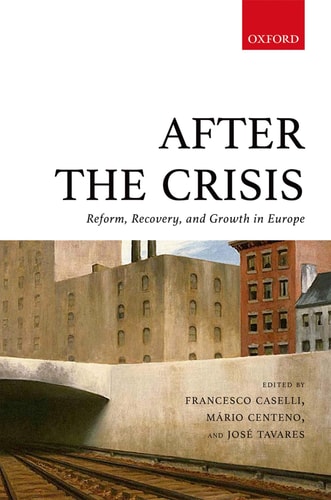
After the Crisis: Reform, Recovery, and Growth in Europe
0
0
As an Amazon Associate and affiliate partner, Menrva Books earns from qualifying purchases. Learn more
Author Description
After the Crisis reassesses the twin projects of structural reform and European integration in the wake of the Great Recession and the European Sovereign Debt Crisis.The introduction compares the pre-crises debate to the current situation, and highlights a number of ways in which both reform and further integration may have become more difficult. Chapter 1 surveys the state of the structural-reform agenda, its successes, failures, and priorities for further action. The second chapter focuses on the fiscal-policy response to the crisis and advocates a greater balance between supply-side reforms and demand-side management. The third chapter focuses on the asymmetric shocks across economies in the monetary union, and discusses institutional mechanisms to reduce their frequency and impact. Chapter 4 examines the cyclical behavior of output and financial indicators, as well as the counter-cyclical role of macro-financial policies, both at the national and the European level. The fifth chapter studies changes in Europeans' attitudes, showing how the recent crises have eroded public confidence in European institutions. The sixth chapter tackles the demographic challenges facing Europe, and particularly the way that demographic change may impact the reform agenda. Chapter 7 highlights the under-appreciated extent to which 'Europe', taken as a whole, is characterized by a substantial amount of inequality and geographical income clustering, and the challenge this poses for further integration.
Menrva's Summary
THE THESIS
This book investigates the efficacy of structural reforms and European integration strategies implemented in the aftermath of the Great Recession and the European Sovereign Debt Crisis. The authors, a team of expert economists, synthesize macroeconomic data and institutional analysis to evaluate how these crises altered the political and economic landscape of the European Union. They argue that the path toward recovery requires a recalibrated balance between supply-side structural adjustments and demand-side fiscal management to address persistent regional inequalities.
THE SCOPE MAP
What You Will Find
- Analysis of structural reform agendas and their varying degrees of success across European nations.
- Evaluation of fiscal policy responses and the necessity of counter-cyclical macro-financial measures.
- Examination of demographic shifts and their long-term impact on the European reform agenda.
- Investigation into public sentiment and the erosion of confidence in European institutions following the crises.
- Assessment of income inequality and geographical clustering within the monetary union.
THE AUTHORITY PERSPECTIVE
Experts identify this work as a critical resource for understanding the institutional complexities of the post-crisis European economy. Readers frequently note the technical density of the prose, which is best suited for those with a background in economics or public policy.
Page Count:
224
Publication Date:
2016-08-30
Publisher:
Oxford University Press
ISBN-10:
019875468X
ISBN-13:
9780198754688
Economics
Finance
Public Policy
European History
Europe
Community Tags
Similar Books