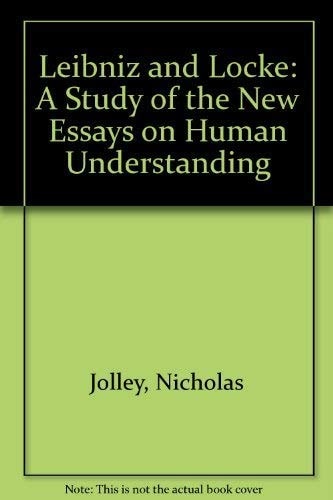
Leibniz and Locke: A Study of the New Essays on Human Understanding
0
0
As an Amazon Associate and affiliate partner, Menrva Books earns from qualifying purchases. Learn more
Author Description
This is the first modern interpretation of Leibniz's comprehensive critique of Locke, the New Essays on Human Understanding. Arguing that the New Essays is controlled by the overriding purpose of refuting Locke's alleged materialism, Jolley establishes the metaphysical and theologicalmotivation of the work on the basis of unpublished correspondence and manuscript material. He also shows the relevance of Leibniz's views to contemporary debates over innate ideas, personal identity, and natural kinds.
Menrva's Summary
THE THESIS
This study investigates the core philosophical conflict between Gottfried Wilhelm Leibniz and John Locke as articulated in Leibniz's New Essays on Human Understanding. Nicholas Jolley, a scholar of early modern philosophy, utilizes unpublished correspondence and manuscript evidence to argue that Leibniz's critique of Locke is fundamentally driven by a desire to refute perceived materialism. By situating the text within its historical context, Jolley demonstrates how Leibniz's metaphysical and theological commitments shape his rejection of Lockean empiricism.
THE SCOPE MAP
What You Will Find
- Analysis of the New Essays on Human Understanding as a systematic critique of Locke's philosophy
- Examination of Leibniz's arguments regarding innate ideas, personal identity, and natural kinds
- Integration of primary source material including unpublished manuscripts and correspondence
- Discussion of the metaphysical and theological foundations of Leibnizian thought
THE AUTHORITY PERSPECTIVE
Experts recognize this work as a significant contribution to the study of early modern rationalism and empiricism. Scholars frequently cite Jolley's analysis for its rigorous use of archival material to clarify the intellectual tension between these two foundational thinkers.
Page Count:
232
Publication Date:
1984-03-22
Publisher:
Oxford University Press
ISBN-10:
0198750641
ISBN-13:
9780198750642
Philosophy
Metaphysics
Epistemology
Community Tags
Similar Books